How much can a band still disturb the familiar ground after more than three decades of making music? With Green Carnation, the answer has never been particularly easy to predict. Across three parts, “A Dark Poem” has taken William Shakespeare’s Ophelia and Arthur Rimbaud’s vision of her into increasingly darker and more elaborate territory, and “A Dark Poem, Part III: The Messiah Complex” now brings that particular journey to its final chapter.
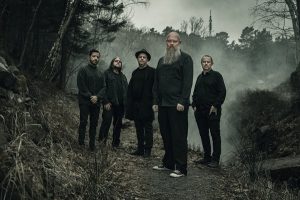
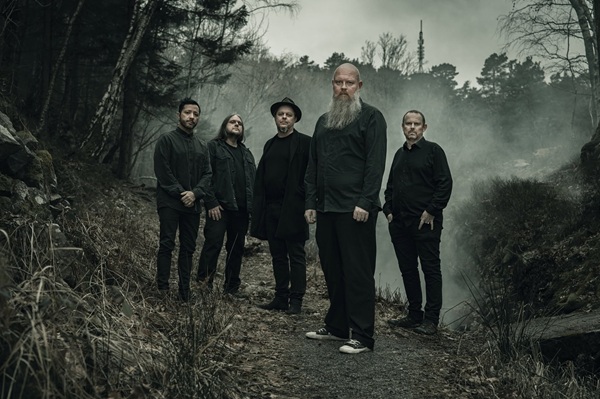
Green Carnation
© Lars Gunnar Liestøl
Released on 4 September 2026 through Season of Mist, this final instalment of the progressive metal group arrives with plenty to examine, and it rewards the kind of listening that leaves you with more questions than easy answers.
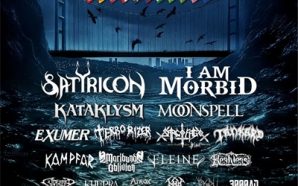
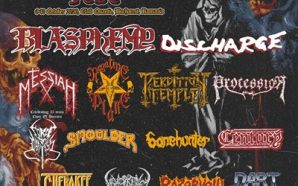
Perhaps some of these questions will find their answers at Quantic in Bucharest, Romania, on 25 September 2026, when Green Carnation will take the stage and bring, according to Kjetil Nordhus, “The Best of «A Dark Poem»”.
Where the Trilogy Reaches Its Peak
The final part of the trilogy is compact in terms of track count, containing four songs with a total running time of approximately 39 minutes. Yet there is nothing slight about what they manage to fit into those compositions. The album moves through melody, progressive structures, heavier passages and orchestral textures without ever sounding like a collection of disconnected ideas.
The first of the four, “Unconditional Artificial Chemistry”, takes just under six minutes to make its point. It begins with keyboards and theremin, an oddly elegant invitation before a monstrous riff enters the room and reminds you the members of Green Carnation have not come here to whisper. The song has a distinctly futuristic character, but there is nothing sleek or utopian about it.
Beneath the pressure of the guitars, Stein Roger Sordal’s bass and Nordhus’ vocals, the arrangement leaves enough space for the quieter orchestral touches to creep in.
Without a doubt, it is one of the strongest entries of the album.
The title track, “The Messiah Complex”, takes a completely different route. Airy passages, a melodic chorus and a dreamy gothic-doom atmosphere give the song a character of its own. This is where Green Carnation seem most interested in creating a mood and letting it unfold at its own pace. And this is precisely where the magic happens.
I found myself returning to it with increasing attention, because there is something particularly absorbing in the contrast between its gentleness and the complexity of the ideas beneath it.
Then comes “Broken Souls, Common Enemies”, nearly nine minutes of considerably heavier material. Thick guitars, forceful drums and layered vocals give the composition a much more imposing presence, while the melodic passages prevent it from becoming merely an exercise in heaviness. The spoken-word section fits naturally into the arrangement, but the guitar solo is where the song truly finds its emotional centre. It arrives with remarkable feeling and gradually builds its way into one of the album’s most memorable moments.
And then, after three songs that have steadily expanded the album’s emotional and musical vocabulary, Green Carnation leave us with “A Dark Poem – Orchestral Suite”. At approximately 17 minutes, this is not merely an outro stretched beyond reasonable proportions. The Kristiansand Symphony Orchestra gives the composition an entirely different dimension, allowing themes from the trilogy to acquire a broader, almost cinematic form. The result is grand without becoming pompous, melancholic without drowning in sentiment, and patient enough to let every passage find its proper place.
This is the grande finale an album of these proportions needs.
Final Words
The entire trilogy leaves you with plenty to ponder. What initially appears to be a more familiar story of grief and its consequences gradually opens into something considerably harder to define, especially once the final chapter begins to unsettle what we thought we understood. Ophelia herself becomes increasingly elusive, and perhaps that uncertainty is part of what makes the whole journey so fascinating. Things refuse to remain where we first placed them, and that has its charm.
The three parts are not music to be consumed in passing, either. They ask to be experienced, absorbed and returned to, because there is always something waiting beneath the surface that may not reveal itself the first time around.
Song List for the Trilogy
“A Dark Poem Part I: The Shores of Melancholia”:
“As Silence Took You” [07:12];
“In Your Paradise” [07:04];
“Me, My Enemy” [07:17];
“The Slave That You Are” [06:16];
“The Shores of Melancholia” [05:38];
“Too Close to the Flame” [09:16].
“A Dark Poem Part II: Sanguis”:
“Sanguis” [09:05];
“Loneliness Untold, Loneliness Unfold” [04:04];
“Sweet to the Point of Bitter” [05:58];
“I Am Time” [05:39];
“Fire in Ice” [07:03];
“Lunar Tale” [05:25].
Instagram: https://www.instagram.com/green2carnation/.