What do you do when you feel you have a story to tell, one that may not end in relief, but through which others might still find resonance? You turn it into songs. That is what Colin H. van Eeckhout, vocalist of the Belgian post-metal band Amenra, tells us. His stories are never simple, and they are never brought to the ears of listeners until the members of the band decide they have reached the point where nothing more can be added, where everything that lives within them has been laid bare. In his words:
“We continue writing until we feel like it’s done, until we feel like we can’t make it any better. The songs need to have a story.”
And given that the discography of the group is bounteous, a conversation about it was inevitable. It took place at Quantic in Bucharest, Romania, on 17 May 2026, just before the members of the group stepped onto the stage and made us feel the songs themselves. Because, in the end, that is what matters most: going to a concert and feeling the message carried within the music.
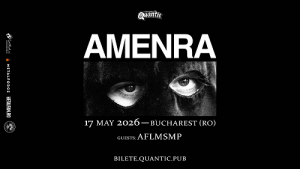
Official announcement poster
© Quantic
Greetings, and thank you for making time for this interview. One does not simply knock upon the door of Amenra. So then, before we wander towards heavier matters, tell me, with what thought did you wake this morning, knowing the day stood marked as 17 May 2026 and that, before nightfall, you would once again stand before the people of Romania?
Colin H. van Eeckhout: Greetings, and thank you as well for the invitation to speak.
My first thought? Simple enough. Before the day had properly started, I knew I had to send a message to my girlfriend. After that came another thought, quieter perhaps, that it felt good to find myself returning once more to Romania.
We’ve been here a couple of times and I think it’s been so long ago since we played here for the first time and it has always been a good experience. We’ve always felt very welcome. There were always a lot of people here and everyone was always very enthusiastic.
So, it’s a blessing that people keep inviting us to come. I am very, very thankful. We all, in fact, are very thankful for that.
Glad to hear that. The people of Romania have been waiting impatiently for this moment. In the end, that is only natural, especially as you also have a rich discography that allows you to draw various songs to bring them to our ears. Speaking about the eight albums released, to which we can add the multitude of singles, EPs and live albums, I would like to know how you feel now, when you look back and realise how much work you have put in?
Colin H. van Eeckhout: Oh, it’s interesting. It’s harder and harder to write an album, but I think the important thing for a band is that you have to wait long enough until you have something to say, until you have a truthful story to tell.
You can’t write an album every year. You can’t do that. There are bands that do that, you know, they make an album every year, every two years, despite whether they have anything interesting to say or not.
But I think the magic lies in trying to tell a story that has the right to exist, or has the need to exist.
Because our lyrics are drawn from spirituality mostly and lived experiences, contemporary experiences and also love. And the loss of love and losing people you love. Especially that, I think, is one of the most important moments in a human life.
If you lose someone you love, that’s really pivotal in a human life. Everything changes. You have to find a new balance. You lose everything you are used to and it changes sometimes your view on life.
And so, for us, Amenra is a way to think about that and to make music that represents whatever we’re feeling in some moments. The journey is about overcoming those things, it is about how you can be broken and how you try to stand on your feet again. That’s pretty much what we work with.
But I mean, the more albums you write as a band, I believe, the harder it gets in a way, because the expectations of the people grow and after a while you become public domain. People sometimes see you almost as an object that they own, especially people who are very fond of your music.
It gets harder and harder, I think, to fulfil all the things that people expect from you and as a band you have to try not to think about that. You have to tell a story that is important to you and truthful to you.
But yeah, you fear disappointing people along the way. You don’t want to disappoint people who follow you for years. You want to keep them satisfied. Or people who have tattoos of your band, for example, you want them to stay proud of that tattoo. You don’t want to let them down.
It becomes harder and harder as an artist to make new things.
Once someone told me that once a piece is released, it no longer belongs only to the band, but to everyone. Each person finds their own meaning in it. Do you resonate with that?
Colin H. van Eeckhout: Yeah, I think I said that too in the past. Yeah, I think that’s true.
When people mail us or message us and ask us, “That song, what does that mean?”, my answer is always, “It doesn’t matter what it means to me. It matters what it means to you. What is it about for you?” That’s what needs to be important for a listener.
Indeed, in a way, it starts to belong to everyone.
Sometimes we read people talking about our music and someone says, “It’s about this and that” and they mean something by it that we never even thought of ourselves. We read it and go like, “Oh, okay”. It becomes a new thing for us too.
But that’s interesting. The most important thing with music, or art in general, is that it has to move people. It has to make people think. It has to make people feel. So, if it does that, I think you’re doing a good job or doing what you have to as a creative artist.
Which piece from your entire discography do you think belongs to you the most?
Colin H. van Eeckhout: They all belong to me. They all belong to us more than anyone else. They always belong to us.
But I think some songs are special because you feel like you tap into something magical or understandable. You cannot write down what you just did. You just feel something like, “Oh, this is important”.
It can even be a little part in a song that feels like everything comes together and becomes extremely powerful. It can be two notes and a word that are perfectly placed, but that touch your heart directly or touch your soul in a straight line.
And that’s the magic. That’s where the magic is.
For me, for example, “Am Kreuz” is a song that we always play live. We always put it in the same spot in the set towards the ending because that song gives me new energy. It gives me the energy to make it to the end of the set.
And I remember when we wrote it, when we wrote the second part of the song, we just kept on playing it and the hairs on our arms raised. We knew that was a very special moment for us, that we were able to create and mould this with sound.
So, for me, that will always be an important song.
“Am Kreuz” is a special piece. And since we have already stepped, albeit briefly, into the stories that lie behind the songs across the “Mass” releases, I cannot help but continue by asking you this: how did the thinking process behind them unfold, in those early days when everything was still taking shape?
Colin H. van Eeckhout: We were very young back then when we wrote those songs and we were still exploring what we wanted to be.
We knew what we wanted to be, but we weren’t there yet. So, we were trying to find our way and trying to understand ourselves mostly.
We had all those different influences of different styles of music and different people in the band that we tried to mould into something that made sense and felt coherent.
And the thinking process, I remember, was that we wanted to be more than a band. We wanted to be more than a bunch of guys that make music. It needed to be more than music. It needed to tell a story that was bigger than that.
But it took a while before we actually had something to say. We were making music, but we didn’t necessarily have a story to tell.
After two years of existing, my father died when I was 20. And that suddenly gave me a story to tell. Suddenly I had something important to share with people. Something real that was omnipresent in my life back then.
I told that story. And that’s how we realised that we had to focus on those moments in our lives that are important for one of us and try to tell that story.
Oh, I’m sorry for your loss. I know how it is to lose someone you love.
Colin H. van Eeckhout: Thank you.
Like I said, it’s an extremely important moment in a life. It changes everything. It changes how you look at things, how you look at other people.
And so, I think that as an artist, it’s also the most thankful thing to work with because it’s so important.
Do you still feel the same emotions when you are playing the songs live?
Colin H. van Eeckhout: I try to go there because I’ll always remember how I felt then when we wrote those songs.
You can easily go back in your mind to a certain period in your life. So, I always try to go back there so I can bring it in a sincere way or in a way that people can see the meaning behind the lyrics.
But sometimes you don’t feel like it. Sometimes you’re in a good mood. We’re very good friends and we have fun together. But then I have to go on stage and think about all those things and tell the story.
Nonetheless, we’re used to that. We’ve been doing it since we were 20. I’m 47 now. It became almost a way of working. You just press the button and dive in there.
And then when we’re done, we click it back and then we can have fun again.
For the early releases, up until “Mass VI” in 2017, the word “Mass” was present in the title of each full-length. How did you come to choose it?
Colin H. van Eeckhout: Well, when we started making music, I remember that we saw our songs as prayers.
I’m not a religious person at heart. But when there were moments in my life where I was really hurt, I was praying. I was asking something to protect my father or to heal my father.
And then I realised I was praying. I was speaking to something. I was seeking help in the spiritual or in something that I don’t even know exists, but that’s what gave me confidence.
And then I realised that people need something to hold on to when they feel that fucking down.
After that, I realised our music and our band were also a vehicle to get there. And that maybe we could be that for other people too.
So, each song became a moment of self-reflection. It was, and it is always like this: I write down things that frustrate me or scare me or things that I want help or comfort with. In the past, and even now, I compare it to people who go to church and pray.
And when music vibrates, it’s like incense in a church. The smoke symbolises prayers going into Heaven and reaching God or whatever you want to call it.
So, back then, we said our songs are prayers. And an assembly of prayers and sermons is a Mass. When we put different songs on an album, it became a Mass.
Were there any discussions? Were there members who disagreed with your vision?
Colin H. van Eeckhout: No. I was always extremely lucky that my mates, brothers and friends within Amenra always allowed me to direct the content.
Because I don’t make the music of Amenra. So, whatever the guitar player does, it belongs to him. I can have an opinion about it and we share that. And they can also have opinions about lyrics or vocal lines.
But I think it was because of my dad’s illness and him dying that they blindly followed me. They realised or saw in my eyes how important it was.
And then they just followed me. They went like, “If it’s that important, we’ve got you. Let’s do this”.
They never questioned me in that direction.
Nothing compares to losing a parent, or a figure that guided you when you were young.
Colin H. van Eeckhout: No, nothing compares to that. And the older we get, the fewer problems we have.
In the beginning, when we were younger, we had egos and conflicts. We were pushing each other, saying we needed to be better and prove ourselves.
But now, as we evolve and are able to do all the things that we dreamed of with the band, we have grown into a sense of gratitude towards each other.
We’re a lot softer and gentler with each other because we realise how lucky we are to have found each other.
There’s much more respect and gratitude amongst us now than when we were 20 years old.
I see. And after “Mass VI”, and a few more releases, you came up with “De doorn”. The year was 2021. What made you change the sound? It is obviously different than “Mass VI”.
Colin H. van Eeckhout: You’ll always have a change of sound as a band because years pass by and you evolve as a human being. So, you also evolve as an artist and musician.
But I think it’s important to tell the story that comes out of you naturally at a certain point. It makes no sense to force it into a direction that doesn’t feel natural.
Some bands make strategic moves. They think, “We need to play more of this type of music because it’s popular now”. But it doesn’t feel truthful. It feels like marketing.
“De doorn” was recording during the Covid period and we had organised some special occasions in Belgium.
I started talking and singing to people in Flemish and that world kind of formed itself naturally.
And within 27 years of being a band, different members will sometimes have more time to write than others. One person may be dealing with things at home or building a house and then someone else steps forward creatively.
That’s how the evolution in the music happens.
Which song from this album is dearest to you?
Colin H. van Eeckhout: “Het gloren”. It felt very right immediately. You always feel that there is one song that embodies what you were trying to do.
So, for me that is definitely a song I’m proud of.
And then some songs make more sense live than they do on the album. They translate better live.
Also “Heden” because it was interesting to switch things up and have very long calm parts and very short heavy parts and just work with that dynamic.
“Heden” has a special place in my heart, as well. Was it a challenging song for you?
Colin H. van Eeckhout: Oh, yeah. Every album is challenging.
Every time we write new music, in the beginning I always feel like, “My God, where do I fit in there?”
I always need time to understand the song and find my place inside it. So, it’s always challenging.
I always start by thinking I don’t know what to do, how much time would it take to have a piece done, but it always ends up working out.
You mentioned time. I’m curious, how much time do you allocate for one song?
Colin H. van Eeckhout: It depends. Some songs go fast. Other songs take very long because they don’t feel right yet.
Some songs we can do in one rehearsal. Others can take years because we feel like we’re not there yet.
In the end, we agree that this matter will be resolved somehow. We continue writing until we feel like it’s done, until we feel like we can’t make it any better. The songs need to have a story.
Of course, sometimes you stop even while feeling you didn’t completely nail it. But you can’t force inspiration.
No, you truly can’t do that. May I ask you, as well, which song took you the most time?
Colin H. van Eeckhout: Hmmm, I had a project with Mathieu, a guitar player. Absent in Body. For an album, it took me seven years to find my place in the music.
The music was ready and every time I went running or to the gym I listened to the instrumental tracks millions of times until I started hearing voices in my head on top of the music.
Then suddenly it started forming itself. But yeah, it took seven years.
Nonetheless, it was worth every day of waiting because when we got it right, we really got it right.
We could have recorded vocals after one year and it would have been okay, but it would not have been what it should have been.
Which lyric or part of a song from that album remained important to you?
Colin H. van Eeckhout: That’s a tough question.
They’re all important. Nothing really jumps out above the others.
Understood. Going back to Amenra, and to “Skunk” from 2024, do you have any priceless memories from the making of that one? An original motion picture soundtrack is not a small deed.
Colin H. van Eeckhout: Oh, yeah, it is surely not a small deed.
That album was mainly written by Lennart, Tim, our bass player then, and Mathieu.
I had a very busy time then, so they wrote most of the music without me necessarily knowing what was happening. Afterwards I stepped in and did some vocals, but not too much because the music didn’t ask for much.
But we already had “Song to the Siren” recorded before actually, just me and Lennart. But you actually know that, since you delved so much into our discography, which I appreciate.
It is not a small deed, but I must say that it’s easier to write a soundtrack because you already have images. You see the emotion in the scene and you translate that into music.
Writing an album from scratch is different because you have to analyse yourself. You have to ask what keeps you awake at night.
With a soundtrack, if the director is happy, then you did your job.
Indeed. Moving now a bit to live performances, you were here, in Romania, multiple times. I remember seeing you on stage at Rockstadt Extreme Fest, in the year 2024, for example. What is your impression of the Romanian scene?
Colin H. van Eeckhout: Oh, it’s a very cool community. Back then, at Rockstadt Extreme Fest, we felt really good. It was a gigantic festival and the setting was extremely cool. Those mountains…
We really had the impression we were part of something unique. We never experienced a festival in that kind of setting before.
Normally it’s empty flat fields. There you had mountains and the whole journey of getting to the location.
And at a festival you also see a much broader audience because there are people there for many different bands, not only your own fans.
But it’s always greatly organised and we’re super thankful to be invited there.
And now, you are here, in Bucharest. How are you feeling about being back?
Colin H. van Eeckhout: Great!
We’ve played in here before the tours, so it always feels a bit like coming home.
It’s really nice when you know a venue and know the people who organise it. Every time you come back, you feel a little more part of a family.
So yeah, I’m looking forward to the show from tonight. It’s always a surprise how it’s going to go. Even for us. It’s never the same.
Which song are you looking forward to playing tonight?
Colin H. van Eeckhout: I really like “Boden” because I have a little break before it and can catch my breath before diving back in again.
And “Am Kreuz” at the ending will always be my favourite.
Do you have any expectations?
Colin H. van Eeckhout: I try not to. I mean, I always expect the worst so I’m never disappointed. That’s how I live.
For me, it’s never good enough. I always end up feeling like I could have done better.
We don’t want to disappoint people. People bought tickets, sometimes they travelled far, and we just want to be at our best.
How do you react when someone in the band makes a mistake?
Colin H. van Eeckhout: Sometimes we don’t even hear it because we’re so focused on our own performance.
But now that we’re older, we’re more forgiving. We’re only human and humans make mistakes.
Sometimes people are tired. It happens.
I can’t wait for your performance! Only a few hours separate us from it. And since there is still some sand left in the hourglass, I would like to ask you about future plans for Amenra. Something new around the corner?
Colin H. van Eeckhout: Yeah!
We’re writing a new album. In between all the concerts we’re trying to work on it.
That means, you have a new story to tell.
Colin H. van Eeckhout: Indeed.
Tell me more about it, please.
Colin H. van Eeckhout: In our case, it’s never nice.
A month ago, they discovered cancer in my mother. I think now is a good time for me to write new things.
I’m sorry for that.
Colin H. van Eeckhout: Me too. But our pain becomes someone else’s strength.
If we are hurt enough, we make a “Mass” album and people connect to it. It’s a very strange thing.
But everyone has to go through it. It’s the way of the world.
I agree. May I ask you how many tracks do you think the new album will contain?
Colin H. van Eeckhout: I do not know. We’ll see, I suppose.
We always have more tracks than we need. In the end, we select the songs that make the most sense together and tell the story best.
It seems like it only remains for me and the readers to follow you and extract that information soon enough. Remaining at the topic of future plans, but this time, concerning the live appearances, what comes next after Romania?
Colin H. van Eeckhout: I think we leave for Canada next week. Canada, South America, Guatemala, Costa Rica. We’ve never played some of those places before.
But Canada we know already. Those are familiar grounds for us.
I wish you good luck there! Before we part our ways for some hours, do you have any message for your followers?
Colin H. van Eeckhout: Yes.
We’re eternally grateful for everyone who takes the time to listen to our music and tries to understand the story we’re telling.
Without people following us and listening to us, it would make less sense. It would feel like we’re talking to a wall.
But now it feels like we can speak to people who are open to what we are doing and hopefully we can touch them and mean something to them.
The opportunity we get because of that, we’re extremely grateful for it.
And we are grateful to hear you. Thank you for your time.
Colin H. van Eeckhout: Thank you very much for the interview.
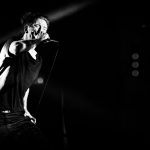
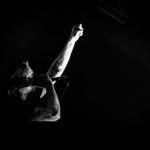
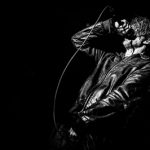
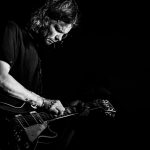

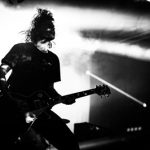
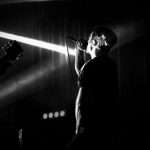
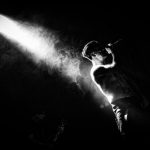
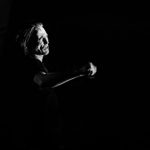
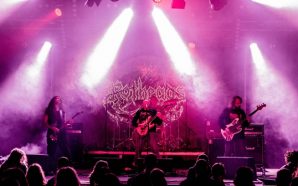
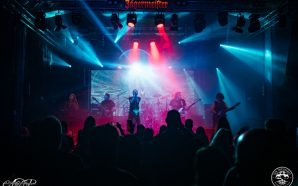
Amenra on stage [Quantic, Bucharest, Romania, 17 May 2026]
© Paul Voicu [LivePictures]