“You are what we live for!”
These words capture the place music occupies in the lives of the members of the NWOBHM band Holocaust and the collective consciousness shared by people who come together through music, a connection that feels especially precious in a world full of turmoil.
When “The Nightcomers” was recorded in 1981, they were young musicians still finding their feet in the studio. Today, what we hear live from their debut album is closer to what John Mortimer [vocals, guitars] originally wanted these songs to be.
But there is more to come. With a new line-up bringing fresh life to the old material, the Scots are preparing a double live album featuring “The Nightcomers” in its entirety, alongside a selection of tracks from “Predator”. Meanwhile, new material is taking shape, with the next studio album already on the horizon.
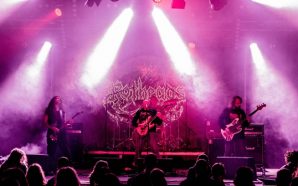
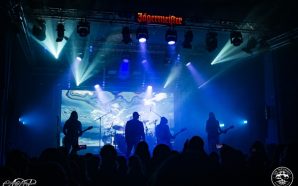
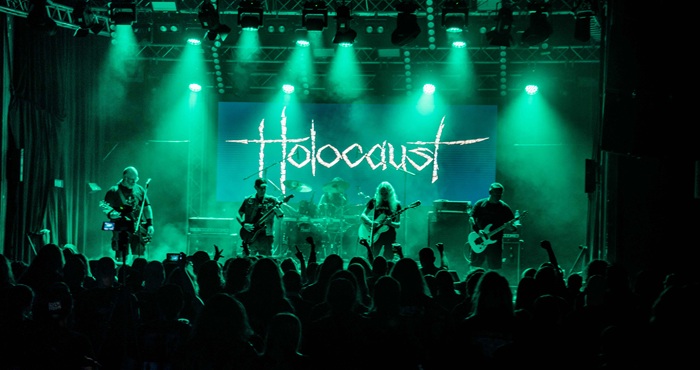
When and where did we find all this out? On 8 October 2026, Holocaust made their Romanian debut at Quantic in Bucharest, headlining Cold Grave Party, organised by Romanian Thrash Metal Club. The audience went wild to their songs, and we took note.
Greetings. It is a pleasure to have the opportunity to talk with you and discuss your experiences in the metal scene. You’ve been part of the Scottish underground for a long time. How would you describe its development, particularly compared with what you’ve encountered elsewhere in Europe?
John Mortimer: Hi, thank you for talking to us. The question you chose to start with is interesting, especially because we touched on this subject as soon as we arrived at Quantic.
The underground scene in Scotland isn’t particularly strong. It’s very strong in Europe, though. As mentioned, we’ve actually been talking about that today. This is our first time in Romania, but the underground scene here feels very much like Greece, Italy or even the Netherlands. It’s strong, and that’s great to witness.
The United Kingdom, on the other hand, is really disappointing when it comes to heavy metal. It shouldn’t be that way, because so many innovative bands have come from Britain, and the British flag is so closely associated with heavy metal. Yet the scene isn’t strong.
Let’s go back to the beginning, then. “The Nightcomers” from 1981 remains one of your defining records. What do you remember about making the album?
John Mortimer: Everything happened very quickly. There were even songs that I hadn’t finished writing. “Mavrock”, in particular, was something we more or less improvised in the studio.
We were very young and still at school, so I think we were a little overwhelmed by the whole experience. We were in a studio, there was a producer, and we, more or less, did what we were told to.
It was a great opportunity, and the songs reflected what we’d written at the time. But we now perform those songs much better than they were played on the original album.
I’m pleased that people love the original record, of course. But what we’d really like to do is put together a live album with definitive versions of the songs as this line-up plays them today.
For Cold Grave Party, we decided to play every song from “The Nightcomers”, so hopefully people will hear just how much the material has developed.
At that time, “Mavrock” proved to be the most challenging track.
John Mortimer: Definitely. I hadn’t finished writing it, so we were making things up in the studio. The idea was to speed up the tape, make everything incredibly fast, put a crazy solo at the end and then stop suddenly.
It was fun at the time, but when we play it now, you can hear what the song can really be. It’s a wonderful ending to the set and one of its highlights.
I’ve never made a secret of the fact that there are things about the original album I don’t particularly like. I don’t listen to it very often. I’d rather play the songs as they should be played now.
“Mavrock” is one of the tracks that has improved the most, but “Come on Back”, “The Nightcomers” and perhaps even “Heavy Metal Mania” have also developed considerably. It’s nice to look back and remember that period, because it was exciting, but I think we do the songs much better today.
I would also like to talk with you about “Elder Gods”, issued in 2019. After so many years of making music, what shaped your approach to that album?
John Mortimer: It was really just what I felt I wanted to write at the time. The band didn’t feel very much like a live band then.
Now, everything changed. The energy and inspiration are coming from the excitement of playing live again, rather than simply from what you can create on your own in a studio.
We love “Elder Gods”. We really do. But it wasn’t designed to be played live, and the circumstances that fed into that album weren’t shaped by the excitement of performing on stage.
There was also a certain feeling of isolation in the United Kingdom. As I said earlier, the scene hasn’t been good for a long time. I’d love to think that will change, but I honestly don’t know if it is possible.
The ideas behind the tracks from “Elder Gods” are very interesting. Let’s start with “Children of the Great Central Sun”. What inspired that song?
John Mortimer: It comes from what’s known as “The Ascended Master Teachings”, an esoteric movement I was very interested in.
The Great Central Sun represents ultimate reality, the true nature of ourselves. We perceive ourselves as individual people, but in that sense we’re all children of the Great Central Sun. The Great Central Sun is permanent. It doesn’t change and has no beginning. The people we take ourselves to be, on the other hand, have a beginning and an ending, and they’re continually changing.
When you really look for that permanent person, you can’t find one. As Buddha would have said, what we take to be the self is empty. That doesn’t mean it doesn’t exist at all, but that it is continually changing.
Our true nature doesn’t change. That’s the idea behind the Great Central Sun, and why we’re all its children.
“Solaris” approaches another figure often interpreted in very different ways: Lucifer. What drew you to that subject?
John Mortimer: I was interested in Lucifer as he appears in occult teachings, rather than in the traditional idea of Lucifer as the devil.
I was bringing together different things I’d been studying, including the Anunnaki and the identification of Enki, one of the Anunnaki, with Lucifer. It was really about all the research that had been inspiring me at the time.
For me, “Solaris” is about Lucifer as a figure who liberates, or has the potential to liberate, through light and wisdom. It’s not about the idea of him simply being a devil.
The album closes with “Natural State”, which seems to connect with some of the ideas you mentioned earlier. What is the story behind that song?
John Mortimer: It’s about Nisargadatta Maharaj, an Indian spiritual teacher who died in 1982. I discovered his teachings through books such as “I Am That”, and I found them incredibly helpful.
What’s important to me now is Buddhism, but Nisargadatta Maharaj belonged to a school of Hinduism that comes quite close to Buddhism in certain respects. His teachings changed a great deal for me.
I wouldn’t say that I follow his teachings now in the same way. I’d say that I try to learn from Buddha. But Nisargadatta Maharaj was a stepping stone towards that, and I found his work tremendously helpful.
I feel a real affection for him and for what he taught. “Natural State” is a tribute to him, and it connects with the idea of our true nature that we were discussing in relation to the song “Children of the Great Central Sun”.
You had various influences for that album.
John Mortimer: Yes, there were various influences. Nisargadatta Maharaj was one, but it was also about researching different teachings that don’t fall into the category of organised religion.
For years, I’d been very interested in Christian theology, and I’m glad I studied it. But I eventually became extremely disillusioned with traditional Christian theology, which led me to look at other possibilities.
“Elder Gods” brings together many different approaches to spirituality. They’re simply things I’ve found useful.
Moving from the studio to the stage, this line-up seems to have brought a new energy to the band. How much work has gone into preparing the material for the current shows?
Scott Wallace: We’ve rehearsed very thoroughly. This line-up only came together in February, so it’s incredible how quickly everything has fallen into place. Everything feels right, and there’s a lot of creativity between us. We already have plenty of new material, and we’re hoping to move forward with recording another album.
John Mortimer: The anniversary of “The Nightcomers” is also a big part of what we’re doing now. A lot of people want to hear the album, and we feel confident about what this particular line-up can do with it. For anyone who knows the original record well, it’ll be interesting to hear these versions. This is much closer to what we wanted those songs to be back then, although we never really had the opportunity to perform them that way.
Even the original band members weren’t always on the same page musically. This line-up is, and everyone brings different ideas and qualities to the music.
It truly seems like you’ve found the chemistry between the members, after so many line-up changes.
John Mortimer: Yes. Couldn’t be better. The chemistry feels right, and although we’ve only been together since February, the honeymoon period doesn’t seem to be ending. Things just keep getting better.
We’re excited about the plans ahead: the live album, another studio album and all the new material we’ve already been working on. We’ve got quite a few songs in the works, and we’re enjoying the live experience enormously.
The plan for the live album sounds particularly ambitious. Can you tell our readers a little more about what you have in mind?
Scott Wallace: The idea is to make it a double live album, featuring the complete “The Nightcomers” album alongside a selection of material from “Predator”, which preceded “Elder Gods”. There are quite a few songs from “Predator” that we’d like to include.
In terms of a new studio album, we’re genuinely excited to discover what this particular band can create. There’s a lot of potential here, and we can’t wait to get into it.
Will the new studio album follow the same songwriting approach as your previous records, or will it be more of a collective effort?
Jonny Hall: Traditionally, John has written a lot of the music, bringing it to the band almost fully prepared. But nearly every member has had some input when it comes to writing new songs. From what the guys have been saying, it’s been a really refreshing experience.
It’s much more about everyone in the band bringing something to the table and taking a collaborative approach to songwriting. For us, the new guys, it’s been such an involving and inclusive process. Just a fantastic experience!
Joining a band with such a long history must come with a certain amount of pressure.
Craig Shortel: Oh, yeah!
I can give you a little background story. Jonny and I were in a band together at school. In 1989, when “The Sound of Souls” was released, we went to the launch show in Edinburgh. There, we were literally blown away by that immense piece of music and the whole experience. The venue isn’t there anymore, unfortunately.
After that gig, we spent years obsessing over that release. We’d always stayed in touch, and a couple of years ago we got back together with the idea of learning and playing the whole of “The Sound of Souls”.
Then came another serendipitous moment. I was in the town where John lives and literally ran into him. I recognised him, although we didn’t know each other personally. I couldn’t walk past without saying hello and telling him how much his music had influenced me over the previous 25 or 30 years. I completely fanboyed. It was embarrassing, and I couldn’t stop myself, but John was very gracious and polite about it.
We stayed in contact, and Jonny and I recorded “The Sound of Souls”. We sent it to John, wondering whether he’d simply delete it or even listen to it. Instead, he came back with a lot of positive feedback.
Learning “The Sound of Souls” by ear must have been a challenge.
Craig Shortel: It’s an incredibly difficult material to play. Even when you know what the guitar parts are, they’re technically demanding. There were no tutorials, no tablature and no written music available to us, so we had to work everything out by ear. That takes dedication, and it gave us a real appreciation for the talent involved in making the original record. It took us a huge amount of time and practice to get everything down, but eventually we learned the entire record. That was a real achievement for us.
We sent the recording to John, and at the start of this year he contacted us and asked whether we’d be interested in joining the band. The members who were leaving were doing so on good terms, but John was looking for people to take things forward.
For two people who had been huge fans of this music since they were 16, it was an offer we couldn’t refuse! It was inspirational!
We met at the end of January or the beginning of February, and the band already had a gig booked for the start of May. That left us less than three months to learn about an hour of material, much of which had developed since the original recordings.
We just about got there. When I say we got there, Jonny got there. That first gig, roughly three months after joining, was quite an experience. But it felt right for the band, and the chemistry has been there from the beginning.
Scott, you’ve been in the band for quite some time. How does this latest change in the line-up compare to the previous transitions you’ve experienced?
Scott Wallace: I’ve been in the band since 2003. I played drums for quite a while, and when I met John, I loved the material he was writing. It was awesome.
I also played with the bass player who appeared on “Predator” and “Elder Gods”. Unfortunately, circumstances beyond his control meant he could no longer commit to the band. We decided we wanted to continue, so we went from being a three-piece to a five-piece.
We used to have just one guitar, and now we have three. We’re incredibly excited about the chemistry with these guys and with Steve. These are exciting times, and I think that will be reflected on the next album. The potential is limitless. With three guitars, we can explore all those wonderful harmonies, dual-guitar parts and solos. I can’t wait to hear what comes next!
What does life look like for you outside the band, both at work and in your personal time?
John Mortimer: The most important thing for me is Buddha, the Buddha’s teachings and the practice of Buddhism. It’s largely something I do on my own, but I take it very seriously. That’s what matters to me outside music, and it’s bound to be reflected in the music to some extent.
People might think Buddhism and heavy metal are an unusual combination, but I’m the man for the unusual. I don’t shy away from it. Metal itself is one of the unusual things, so keep that in mind.
Steve Walker: I work in IT, and I’ve been interested in web design for about 20 years. I play guitar, of course. Even when I’m not in a band, I’m learning, trying to write new material and working on my playing.
I also love riding motorbikes across Europe, anywhere I can find an open road. I’m quite quiet and down to earth.
Scott Wallace: I work in IT, too. I would like to change that. Outside work, I’m involved in the band, and I try to get out on my mountain bike whenever I can.
I’ve also produced the last two albums, so I have a small studio at home. That keeps me busy.
Jonny Hall: Most of my time outside the band is spent with family and guitar. My son is really interested in guitar and plays as well, so I’m enjoying showing him different things about the instrument. It’s great to share that with him.
Craig Shortel: I’ve been married for 25 years, and my kids are 19 and 17. They’re both great, and I love them to bits. I work as an advanced nurse practitioner in emergency surgery, which is a demanding job involving a lot of decisions and stress.
Being in this band is a fantastic outlet. It gives me a way to release some of the pressure that comes with day-to-day work.
After the show in Bucharest, where can fans see you next?
John Mortimer: Immediately after this, we have gigs in London and Liverpool. We also have BroFest in the United Kingdom, next May.
For now, we want to leave ourselves enough time to concentrate on the next studio album. We want to capture the energy of this particular moment, with the line-up having come together as it has.
We already have some wonderful new material, perhaps too much material, but that’s a good position to be in. Once we’ve made progress with the album, we’ll be looking at a lot more live work.
Hopefully, there’ll be a European tour in late spring or early summer, or perhaps around this time next year. We want to do much more live work, but getting the next album together is important. We need to do it fairly quickly to capture the special energy this band has right now.
What has music taught you that you might not have learned otherwise?
John Mortimer: That’s a difficult question. I don’t know. There’s something mysterious about it.
When I first heard Black Sabbath’s “Symptom of the Universe”, from “Sabotage”, I was shocked by just how good that material was. There was an absolute certainty at the time: I have to be involved in that kind of music. And by “involved”, I don’t just mean being a fan, going to gigs and listening. I also mean creating that music and being part of that whole thing. I felt absolutely certain about it. To this day, I still wonder why.
It’s interesting to speculate about what that feeling might mean. As a Buddhist, I accept the idea of reincarnation, and that experience probably led me to think more deeply about it. But beyond that, I’m not sure what else to say.
Craig Shortel: Music started for me at a very early age, when I was about 15 or 16. My goal was always to see live bands.
That experience was exciting and fulfilling. I’d be thinking about which band I wanted to see next, and I travelled extensively around the United Kingdom, and even further afield, to watch bands play.
I suppose this music attracts my kind of people. Heavy music has always been part of my life. I didn’t start playing guitar when I was very young. I actually started on bass, and that eventually led me to join the band many years later. I’m grateful for that.
Jonny Hall: Like John said, it’s difficult to pinpoint exactly why you play music or what it does for you. But there’s something unique about being in a band. We’re almost like a family, and that’s precious to me.
When we leave home to go on tour, or even to play a show like this one, we spend almost all our time together until we go home again. There’s a real connection there.
I was a big fan before I joined the band, and when I realised I could actually be part of creating this heavy metal music, I couldn’t help myself.
Scott Wallace: When I first started playing in bands, we had four guys together, but nobody wanted to play drums. I actually wanted to play bass, but one of the other guys was already planning to play it. So, I thought, “Okay, I’ll play drums instead.”.
I never looked back. It turned out to be the best decision I could have made. I kept playing drums, went through various line-ups, and eventually met John in 2003. We’ve never looked back, and it’s been a great experience. I hope it continues for a long time.
It’s not as though you get bored or tired of it. Quite the opposite. Being able to create music at this level with these guys is still incredibly exciting. All the hard work is worthwhile when you’re sitting here talking about it. It’s food for the soul.
What message would you like to send to the fans who have followed Holocaust throughout your journey?
John Mortimer: They mean the world to us. For a long time, before the internet, I felt as though nobody was interested in this band. I didn’t realise that people all over the world were listening to our music, loving it and helping the following grow.
The music press in the United Kingdom was a big part of that feeling. It sucked. They thought they controlled what was cool and what was popular, and that they could manipulate the whole thing. Back then, they acted as though heavy metal would only last two or three years before disappearing.
For many years, I felt completely isolated. That’s one reason the music became quite abstract. I don’t regret that, because I love the music we created during those years. But I genuinely didn’t think many people were interested in what we were doing.
Then I was invited to play at Keep It True, and suddenly it was like a revelation. There were thousands of people singing “Heavy Metal Mania” and looking at me as though I were some kind of god. I was thinking, “What? How is this happening?”.
I began meeting people who had followed the band since the earliest days, people who had been fans for years, and I simply hadn’t known they were out there. That means an enormous amount to me.
It means just as much that younger people are discovering the band today. “Heavy Metal Mania” came out long before some of them were even born, yet they understand it, they come to the shows and they connect with the music. They mean the world to me, too.
The final song on “Predator”, “What I Live For”, is my message to the fans. It’s essentially me telling them: You are what I live for.
Scott Wallace: I’d just like to thank everyone for coming to the shows and continuing to support the band. When people turn up, want to talk to us, ask for an autograph or want a picture, we love that. That connection with the fans is unrivalled. You can’t really put it into words.
We’re incredibly grateful. We wouldn’t be here if people didn’t want to come and see us, because otherwise nobody would book us.
For example, we’ve had people come up to us with stories about seeing the band years ago. One guy saw us at Keep It True in 2013, and he travelled from Germany to see us this weekend. Another person had seen us in Italy in 2016. I was buying an Old Grave Fest T-shirt when he came over, introduced himself and told me he’d seen the band back in 2000.
You’re constantly amazed by these things. Like John said, this is what we live for. We’re just grateful to the fans and everyone who comes to see us. We really appreciate it, and there’s still a lot of good stuff to come.
John Mortimer: The best is yet to come.
Jonny Hall: I couldn’t agree more. For me, who hadn’t really done anything like this before, getting up on stage and seeing all those faces glowing is an incredible experience. Everyone looks so overjoyed to be there, and being able to share that with them is priceless. You can’t put a price on it.
There’s so much shit going on in the world today. For many people, ourselves included, life outside heavy metal can feel like a horrible place to be.
But when you come together with people who share this music, something happens. There’s a kind of collective consciousness, a shared feeling that you experience together. That’s incredibly precious, and I think it’s far more significant than most people realise.
Thank you very much for your time.
Holocaust: Thank you, too!
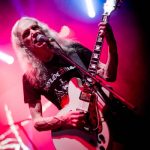

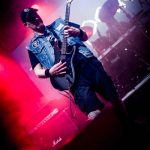
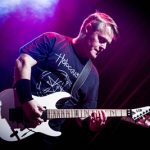


Holocaust during Cold Grave Party, 8 October 2026
© Ștefan Lupașcu