On the evening of 24 June 2025, the courtyard of Quantic Pub in Bucharest, Romania, simmered with quiet expectancy. Sólstafir were back in Romania – not for the first time, nor, judging by the atmosphere, the last. In a land that has long welcomed them with open arms, the Icelandic band delivered yet another heartfelt performance, weaving together bleak soundscapes, windswept riffs and confessional lyricism. Hours before taking to the stage, Aðalbjörn Tryggvason – vocalist, guitarist and founding member – sat down for a wide-ranging conversation.

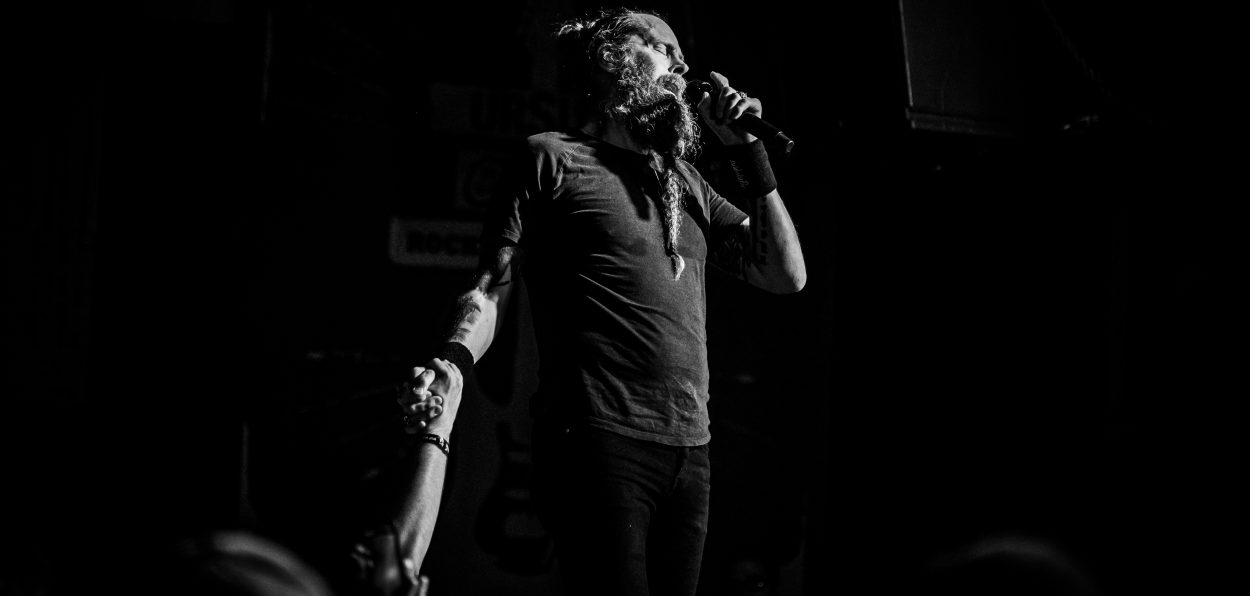
Aðalbjörn Tryggvason performing in Quantic Pub, 24 June 2025
© Paul Voicu [LivePictures Ro]
My greetings! I’m very happy to have you here – welcome back to Romania! I know this isn’t your first time visiting, and we’ll certainly explore that further in a moment. But let’s begin at the very roots of the band. You formed Sólstafir in 1995 – coincidentally, the same year I was born – which makes me all the more curious: what do you remember most vividly about those early days?
Aðalbjörn Tryggvason: Greetings – and thank you very much for taking the time to speak with me.
As for your first question… oh, well, there was no black metal scene in Iceland back then, and we just wanted to try something different. We listened to a lot of black metal and were intrigued by what the Norwegians were doing – bands like Darkthrone and so on.
So, we started writing songs in my dad’s garage. There were maybe six people in Iceland listening to black metal in ’95, and three of them were in the band.
We had no plans to play live – just write music. But then, three or four years later, we were tricked into performing, went to Denmark, and all of a sudden we were a touring band.
Black metal was still fresh in 1995 – part of the second wave – and I was 17. I’m 48 now. So yes, things were quite different.
At first, there were three of you in the band – but for a brief period, Sólstafir operated as a duo. What led to that shift?
Aðalbjörn Tryggvason: We were three members originally, but in 1997 our bassist, Halldór, moved to Australia – to follow his lady. So, for around six months it was just me and Óli.
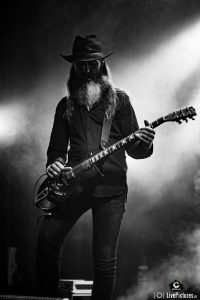
Sæþór Maríus Sæþórsson performing in Quantic Pub, 24 June 2025
© Paul Voicu [LivePictures Ro]
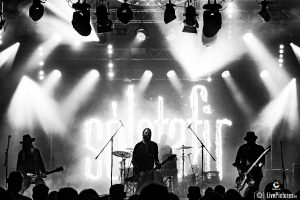
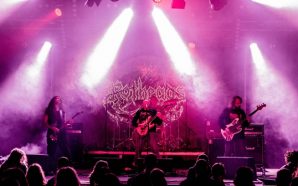
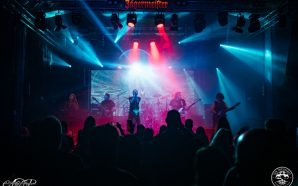
Sólstafir performing in Quantic Pub, 24 June 2025
© Paul Voicu [LivePictures Ro]
Aðalbjörn Tryggvason: We weren’t playing concerts in ’97, so it wasn’t really a challenge – more of a transitional period.
You mentioned Darkthrone earlier – but which other bands had a significant influence on you in those early days?
Aðalbjörn Tryggvason: Definitely the Finnish scene – Impaled Nazarene and Beherit, for example. Of course, the Norwegians: Burzum, Emperor, Enslaved, In the Woods…! We were really into In the Woods!
Halldór was more into the Greek black metal scene – Rotting Christ and the like – and some of the American stuff, such as Blasphemy.
But we also listened to British gothic rock – Fields of the Nephilim, The Mission, The Sisters of Mercy – and Icelandic acts like HAM.
We were absorbing black metal, goth rock, even some pop music. Quite a mix.
So you were absorbing black metal, goth rock – even some pop – quite an unexpected mix. Did drawing from such a wide range of influences naturally push the band to evolve beyond the traditional black metal framework?
Aðalbjörn Tryggvason: We didn’t start using new instruments – at least not in those early years. The experimentation began as earlier as possible.
The first full-length was written between 1997 and 1999 but released in 2002. If you line up our first four records – “Í blóði og anda”, “Masterpiece of Bitterness”, “Köld”, “Svartir sandar” – you’ll hear that it’s always the same band. The changes are gradual.
We never consciously decided to shift direction.
It happens over time – you listen to new things, grow tired of repeating yourself, discover fresh inspiration. We never said, “Let’s change this!” It just happened.
When you reflect on “Í blóði og anda”, from 2002, are there any songs that stand out as especially fulfilling to write?
Aðalbjörn Tryggvason: Writing the album took years – three years of rehearsal, trial and error. Most of the songs were ready before we went into the studio, except the last one, “Árstíðir dauðans”.
My favourites were the opener, “Undir jökli”, and that final track, “Árstíðir dauðans”. I always saw “Undir jökli” as our own “War Ensemble” – that contrast you find in Slayer’s “Seasons in the Abyss”. It’s that balance between something heavy and something more subdued.
On the other hand, were there any that proved particularly difficult or challenging during the process?
The hardest one was, probably, “Ei við munum iðrast”. It had fast sections we hadn’t properly rehearsed.
Looking a bit further along in your discography – “Ótta”, from 2014, stands out for many listeners. How did the process of bringing that album together unfold?
Aðalbjörn Tryggvason: “Ótta” was a weird album, because we had booked the studio on 1 December 2013. So, in 2013, I broke up with my girlfriend, moved out of my house, moved into the studio for two months, and quit drinking, quit doing other destructive stuff. So “Ótta” was almost like my therapy – my rehab album.
It’s a very strange album, and we ended up spending more than two months on it. I was in the studio every single day during that time.
We tried strings for the first time. We had been planning to use violins and cellos. So it was weird, because we always just felt like some punks from our neighbourhood, and all of a sudden we had these classical players performing on our heavy metal songs.
We were like, “What the fuck, this is really happening”. We could hardly believe it was happening. When you put four girls playing violins and violas and cellos, it really comes alive. I truly asked myself, “Holy shit, is this really happening?” But to us it was a very natural progression.
If you take “Svartir sandar”, it’s like three years before. It’s a totally natural continuation. We even thought about putting strings on “Svartir sandar”, but it just didn’t happen.
This time around, we did. It was a long procedure. We spent a lot of money on that album, being there for two months. But I never regretted a single dollar we spent.
There’s something deeply evocative about the “Ótta” cover – it conveys a sense of solitude and quiet strength that really stayed with me. Could you tell me more about the story behind it?
Aðalbjörn Tryggvason: The story goes like this: in 2007 we were making our “Köld” album, and we were looking for an artwork to go with it.
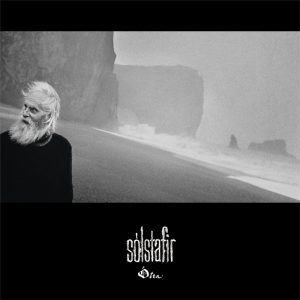
The official cover artwork for “Ótta”
© RAX
Originally, we thought, “How about that famous photo by RAX – the one of the guy on the beach*?” But we changed our minds because we believed that would never be possible. We thought, “First of all, he would never say yes. If he says yes, he’s going to ask for a lot of money.”
So, we didn’t even ask him, it stayed just a dream – the 2007 dream.
Some years later, we came up with the album “Svartir sandar”. In 2013 we were working on “Ótta”, and I had a journalist coming to my place. A journalist from the biggest newspaper in Iceland. He asked to come to my home, because Sólstafir was making a new album. “Fine, come to my place”, I said. Later that week, the journalist knocked on my door, came in, and said, “Hey, I brought this photographer to take photos of us.” The photographer was RAX. Imagine my surprise. Rax is, without exaggeration, the Axl Rose of photography. It felt like the journalist brought Axl Rose to my house.
And the newspaperman, Óri, said, “Don’t pay him compliments – he gets very embarrassed. You can’t say you love his work. He’s very humble.”
So I told him the story – that we’d wanted to use his photo years ago. I said, “I almost called you like seven years ago, but we were too shy”. And he said, “Why didn’t you call me?” I had to tell him the whole thinking process, like “I did not call you because: A) you would never say yes, and B) you’d ask for a lot of money.” He looked at me, surprised, then said, “You can use it now if you want.” And I was like, “What? Sure!”
I asked, “How much do I have to pay?”
The reply was, “Nothing.”
During that day I also found out why he was there. His son was a big Sólstafir fan. So he liked knowing Sólstafir because his son liked us. And now we’re friends.
He sent me 20 or 30 photos – outtakes of the guy from the cover. He’d been walking with the guy for many days, and the guy always turned his back to the camera.
He didn’t want to be photographed. So RAX had been shooting all these crap photos – nothing good. And then, for one second – click – he looked at him.
He got like 500 bad photos and then… this one. The one that now serves as an artwork as well.
Quite a story! And I think you might have another good one for me – this time about your 2011 song “Fjara”. I remember that around its release, it seemed to be absolutely everywhere. People from Romania and beyond were constantly posting it on social media – it really struck a chord with audiences far and wide. What was the inspiration behind the video?
Aðalbjörn Tryggvason: Oh, “Fjara”! We brainstormed a lot for that one. Two things came up. There’s a video by Glenn Danzig called “Crawl Across the Killing Floor”. In the video, it’s just him walking around with a baby coffin behind him. Then, there’s an old Icelandic movie called “Children of Nature”. In one scene, a person is dragging a coffin across the country. Those two inspired us. We were like, “We have to do this!”
And you just did that! How do you feel about “Fjara” now, years later? Are you still proud of it?
Aðalbjörn Tryggvason: Yes, yes! That was us trying new things. Usually when we do that, it works. In the studio we were like, “We’ve gone too far. Everyone’s going to hate this.”
Really?
Aðalbjörn Tryggvason: Yeah, because in our hearts we’re a metal band. And suddenly – imagine the situation – the metalhead writes something like this, and you think, “They’re going to hate it. It is too soft.” Still, we always say to ourselves that it doesn’t matter if they hate it. We like it.
So, with “Fjara” we went like, “Fuck it! Maybe they’ll hate this – we don’t give a fuck.”
But, in the end, it turned out great. It’s not a bad song.
If someone told me “Fjara” is the worst song they’ve heard, I couldn’t take them seriously. It’s a good song. I can say that without being arrogant.
It is a very good one, no doubt. And for this song, you collaborated with Rebekka Kolbeinsdóttir, who really brought something memorable to the video. How was it working with her?
Aðalbjörn Tryggvason: It was a very good collaboration. Rebekka is great – very professional and easy to work with. She brought a lot of authenticity and emotion to the video, which really helped bring the story to life. It was a pleasure having her on board.
What’s more, she’s not just an actress – she’s someone with a full life. She has three kids and runs a shop. If you ever drive along the south coast to a place called Hvolsvöllur, you can find her shop. It’s called “UNA”.
Wonderful! If I ever get there, I will pay her a visit. Now, shifting gears a bit, I’d like to talk about your newest material, the one from 2024, entitled “Hin helga kvöl”. Congratulations – it’s an impressive addition to your discography! For this album, you chose “Hún andar” as the opening track. What led to that choice?
Aðalbjörn Tryggvason: Wow, interesting question. Hmm, there are nine songs on the album, and four of them could never have been the first song. “Hún andar” is just like a standard up-tempo song. It’s not too heavy.
The second song is very heavy. We often have weird songs. So this time it felt like – how about we put out a not-so-weird song? Let’s do something different.
It’s a mid-tempo song, or even high-tempo. It’s almost like us paying respect to our British goth rock idols.
Could you tell me more about the story behind that song? From what I know, “Hún andar” translates as “She Breathes”.
Aðalbjörn Tryggvason: Yes – “She Breathes”.
The story’s about when someone you love is kind of… gone. Because of mental disorders or drug abuse. So the person you once loved could be sitting right here – but they’re gone. The soul is gone. The persona is gone.
But they’re still breathing. You know what I mean?
The mental illness has eaten the soul. They’re already dead, in a way – but still breathing. Still moving, still doing the chores. But the spirit, the soul, it’s gone. And that’s the part I loved about this song.
It wasn’t meant to be some sort of a wake-up call. It is, in fact, about someone I loved very much – and still love today – but it’s a different person.
I am sorry to hear that.
Aðalbjörn Tryggvason: It’s life.
Thank you for sharing such a personal story behind “Hún andar”. Moving on to the second track, “Hin helga kvöl”, – it’s noticeably heavier and faster. How did you approach writing that song compared to the rest of the album?
Aðalbjörn Tryggvason: When “Köld” came out in 2009, we did a tour in 2019 for its 10th anniversary. So we started playing a lot of those songs again. We really enjoyed playing the faster stuff – and since we had some line-up changes, and we’re older now, we thought: this band, in this form, has never written music like that.
So we figured, “How would it sound now if we wrote that kind of music?” That was the question. The answer was this song.
Staying on the topic of the new album, did anyone take the lead on lyrics?
Aðalbjörn Tryggvason: This time, yes. Most of our albums – like “Köld” or “Svartir sandar” – were mostly written by the four of us in a room. This one wasn’t like that. We’ve got more wives, more bosses, more jobs, more kids – so there’s less time for us to be all together.
I’d say half the album was written by me alone in my studio, and the other half in the rehearsal space with the others. Some parts, Sæþór brought in by himself. But, I wrote nearly all the lyrics this time.
Last album, I hardly wrote any. I think I wrote two songs. On this one, I wrote like eight.
That’s a big effort! You mentioned family obligations and day jobs. How do you balance all that with touring?
Aðalbjörn Tryggvason: I have a very nice mother. Without her, I couldn’t be in this band, touring. For the others it is easier. Their kids are older now. I have a five-year-old girl. The others have, like, 20-year-olds.
That’s lovely – may she grow strong. Since we’re on the topic of touring – you’ve been to Romania several times and are about to perform tonight at Quantic Pub. You’ve also played festivals like Dark Bombastic Evening and ARTmania Festival. How would you describe your experience with the Romanian scene?
Aðalbjörn Tryggvason: Romania has always been great to us. I remember the first time – Dark Bombastic Evening – that was like 12, 13 years ago. Good festival.
You know, it’s weird, because we don’t book our own shows. We just keep getting booked all over Romania. It feels like we’re very welcome here. And I love being where we’re welcome. I always ask myself when we’re here, “Are they tired of us yet?”
Quantic is a great venue. Perfect size. Dressing room’s great. There’s even a nice carpet on the floor, haha. Lots of people. When we arrived here, I told our drummer that this is what we’re missing in Reykjavík. A house like this. We don’t have a venue like this.
Do you think things might change for Iceland in the future?
Aðalbjörn Tryggvason: No, it’s a small place.
Honestly, it feels like we’re more welcome in Romania than in Iceland.
I see. Since you brought this up, I have to ask – is there one festival or concert in Romania that has truly stayed with you?
Aðalbjörn Tryggvason: Dark Bombastic Evening, around the “Svartir sandar” era. That was the first album we really toured. We mostly played songs from that.
And beyond Romania – is there a festival or concert elsewhere in the world that’s especially meaningful to you?
Aðalbjörn Tryggvason: Roskilde Festival in Denmark. Growing up in Iceland, that was like the biggest one. We played that in 2010. That was a childhood dream.
Another one would be our first concert in Nosturi, Finland. Amazing experience.
And now, let us focus on this gig, as well. What’s one song you’re really looking forward to playing tonight – one that holds meaning for you?
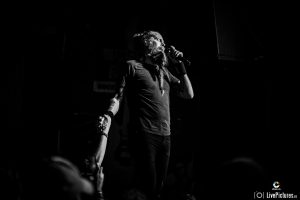
Aðalbjörn Tryggvason performing in Quantic Pub, 24 June 2025
© Paul Voicu [LivePictures Ro]
Aðalbjörn Tryggvason: I am tempted to say “All of them!” But there are three that we never leave out. One of them is “Goddess of the Ages”.
Any surprises?
Aðalbjörn Tryggvason: Yeah. Two very fast songs. And a very slow one. You’ll have to tell me after if it was a surprise.
Sure thing – I’ll speak with you afterwards. Before we wrap up – is there any advice you’d give to those just starting out in music?
Aðalbjörn Tryggvason: Have an open mind. Listen to Ennio Morricone, ABBA and Deicide. Write from your own heart. Don’t give a fuck what anyone else thinks.
This is my message to everyone who wants to be a part of this. And to you – thank you very, very much for your time.
Thank you, too!
___________________________________________________________________________________________________________
* Guðjón Þorsteinsson – farmer, mink-hunter, and lifelong resident of Garðakot – was photographed by RAX on the misty shore at Dyrhólaey. He died in 2006, aged 81.