Official logo
© Archvile King
I do not know how France does it, but in terms of music, it always comes with that something that impresses me. And the latest discovery was the album “Aux heures désespérées” by Archvile King, released this year, on 23 January.
A solitary endeavour, inclined towards black metal, with hints of melody and touches of fantastical themes. Here, with the themes, it caught me from the first moment; I have always had a fascination for songs that detach themselves from everyday reality, yet do not abandon it completely. If we also add the genre and, of course, the fact that it was released under Les Acteurs de l’Ombre Productions, a label for which I hold a particular respect, we already arrive at the conclusion that I am hearing what I want to hear.
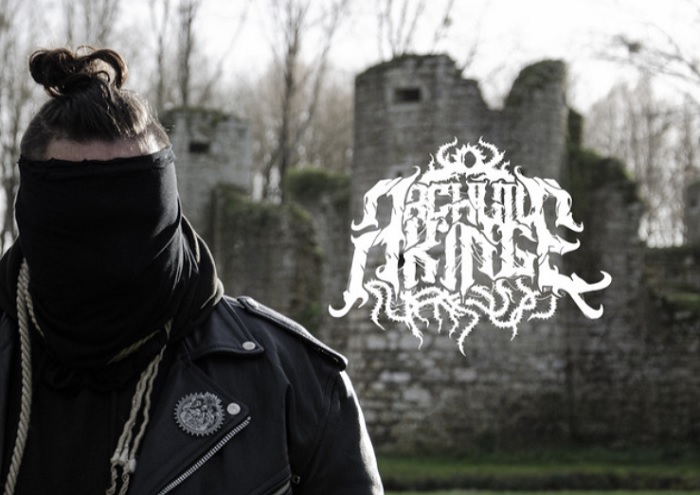
But we also arrive at the question: how does a single man, Baurus by pseudonym, manage to master so many parts so well, from vocals to instrumentation?
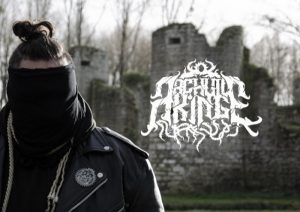
Baurus
© Archvile King
Threads of Sound
The new album from Archvile King contains eight tracks, seven of them with lyrics exclusively in French and one instrumental song. Although my French, at the level of pronunciation, suffers terribly, at the level of translation it is quite good. Or, rather, it was such that I could understand what the author is singing about.
“Riposte” rises as if from a storm, the keyboards murmuring like water trickling through a hollow chamber. The rhythm is sharp and brittle, each beat echoing against a frostbitten landscape, while Baurus’ vocals drift low and distant, like a shadow slipping across the walls. Melodies cut and curve through the harsh backdrop, carrying me to the final flare of the track before leading into “Le chant des braves”, which opens slowly, offering a fragile pause, a quiet before the surge. The guitars carry a darker hint here, still retaining a faint trace of gallantry, before “L’excusé” arrives, hazy and hesitant at first, only to be engulfed by sudden bursts of energy that coil and press upon the senses.
The flow never rests completely; rhythms rise and fall, drawing tension from the spaces between notes. “Le carneval du roi des vers” begins with a dissonant, uneasy introduction, a meeting with the uncanny, before the riffs assert themselves again, heavy and precise.
Choruses emerge like fleeting glimpses of light through a dense wood, softening the shadows and allowing me to breathe between waves of sound. “Sépulture” follows with its cryptic keyboards, providing an interlude of reflection that postpones the looming weight of violence. By the time “Aux heures désespérées” unfolds, the album moves with deliberate, measured motion, threading melancholy through each passage while maintaining a careful, compelling tension that refuses to relent.
And the melodic journey is far from over. With “À ces batailles abandonnées”, Baurus comes with a hypnotic, almost ceremonial passage. The quiet before the storm, ey? A battlefield long abandoned yet still echoing with memory. When the guitars ascend, they slice through the gloom with a jagged insistence. Rhythms clash and intertwine with the leads, a subtle play of tension and release, before the piece gradually yields to a calmer, more reflective conclusion, where ethereal textures linger like mist over cold stone.
The final chapter, “…et aux hommes misérables”, carries a quiet majesty. Here, the rain returns, faint yet persistent, threading through delicate keyboard motifs that feel almost sacramental in their restraint. Dungeon synth elements [indeed, here, you sense my soul again, because I do love dungeon synth] rise and fall, hinting at ancient corridors and hidden halls, while the melodies drift across the void with a sombre, almost mournful grace. An exceptional ending for an album so dense. A tale complete.
Echoes in Pigment
They say you cannot judge a book by its cover, nor an album by its artwork. It is a principle I often follow, yet here I feel it is almost impossible not to pause and give a track a listen once you see the artwork. The artwork that accompanies the album, courtesy of David Thiérrée and Sauge Noire, performs its role perfectly. There is not a single piece that does not complement the album, and it stands out through its approach to colour.
I have always been drawn to artwork dominated by warm tones, yet touched with a cold colour that reminds you that contrasts exist everywhere in the world. As the author Andrzej Sapkowski tells us, “Proportions are negotiated”.
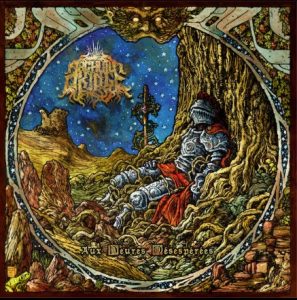
Official cover artwork
© David Thiérrée and Sauge Noire
Closing Reflections
I found myself returning to this record often. The reason I kept returning to it, and will return again, is simple: the full-length keeps your mind engaged and your pulse elevated. Baurus chose his themes carefully and worked with meticulous attention to them. A strong contender in French black metal.
Arriving here, at the end of the review, dear reader, I cannot claim to offer an answer to the question posed in the opening paragraphs. I do not know how the artist managed to bring this album to completion with such coherence and strength. What I do know is that it has earned a place in my personal catalogue.
The Songs
“Riposte” [05:52];
“Le chant des braves” [04:21];
“L’excusé” [05:39];
“Le carneval du roi des vers” [07:05];
“Sépulture” [07:35];
“Aux heures désespérées” [05:54];
“À ces batailles abandonnées” [05:47];
“…et aux hommes misérables” [04:26]
Official Pages
YouTube: https://www.youtube.com/@archvileking;
Bandcamp: https://archvileking.bandcamp.com/music;
Spotify: https://open.spotify.com/artist/6Hk7yjms9EOneKc6uqyaoi;
Facebook: https://www.facebook.com/archvilekingband;