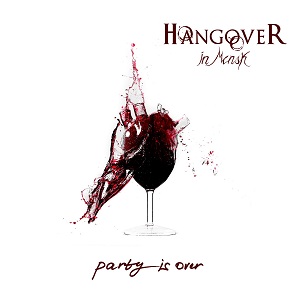
The official cover artwork for “Party Is Over”
© Viacheslav Baranchikov [cover picture] | Nokt Aeon [cover idea]
For years, depressive black metal was the genre I gravitated towards the most. There was something deeply personal in that emotional bleakness, something that echoed my own moods rather than romanticising them. But as time went on, fatigue set in – too many albums felt hollow, derivative, or simply too self-indulgent to say anything of value. I stopped actively looking. And yet, sometimes a record just finds you, and makes you not only listen to it, but write about it, too.
The Album – Pain, Rage, and Bitter Irony
It begins with “Farewell”, a title that already hints at emotional dislocation. The opening is subdued, almost skeletal, a few acoustic lines gently unfurl, joined by a lead motif that doesn’t demand attention so much as it seeps into your consciousness. The arrangement grows in the background, almost imperceptibly, until Nokt’s voice makes its entrance and shifts the emotional register entirely. Her delivery is grounded in a kind of despair that refuses embellishment. When the howl breaks through, it’s not a flourish; it’s a reckoning. There’s a quiet heaviness to it all, a sense that you’re stepping into someone’s private collapse. Lines like “I will never see you/Will never hear you/Will never touch” aren’t cryptic or poetic for the sake of it. They are blunt, repetitive, and final. Even when the language switches, the meaning stays exactly the same. Nothing is dressed up. The cold is literal.
Then comes “Drunk and Beautiful”, a track that feels deceptively delicate at first. It shares some DNA with its predecessor, but there’s something more exposed here, something almost self-questioning. The repeated lines “Will you still love me?/Will you still be here?” aren’t rhetorical. They hang unanswered, suspended in a haze of cyclical melodies and wearied rhythm. The portrayal of addiction is stripped of glamour, turning instead towards the numbing routines of shame and longing. The vocal phrasing draws you in not through drama, but through exhaustion, as if every line costs something to say aloud. It doesn’t wallow. It just is, and that makes it all the more unsettling.
“Fuck You, My Love” shifts the focus again, dragging all that previously internalised anguish into full daylight. If the earlier songs leaned towards resignation, this one is clenched-fist fury. Déhà’s vocal contributions here are especially sharp as if the track is moments away from fracturing entirely. The tempo accelerates, and with it, the sense of unravelling intensifies. Guitars twist and layer in increasingly complex shapes, but the emotional centre remains clear: this is heartbreak spoken in the language of attrition.
“Devil in Me Wants to Dance” is the wild card. It doesn’t abandon the album’s themes, but it frames them differently. Completely different. Not as a dirge, but as a dangerous kind of momentum. The bass pulses more aggressively, the vocals lash out and then retreat, and somewhere in the mess of rhythm changes and fractured riffs, the song becomes something more than just an expression of failure. It teeters on the edge of collapse and euphoria, and somehow makes both seem inevitable. It’s a hard song to summarise because it’s less about structure and more about a kind of nervous release – a purging. Whether you relate to the subject matter or not, there’s something oddly intimate in how it balances control and chaos.
Then we have “The Cow Was Stolen from the Bar (Again)”, a title that sounds absurd until the track actually plays. It’s funny. Then it’s not. Then it is again. There’s a real talent in writing something that walks the tightrope between satire and sincerity without falling into parody, and this one manages it. The lyrics veer into darkly comic territory – suicide references, drunken escapades – but behind the irony is something unnervingly bleak. Musically, it’s bizarrely catchy in parts, groovy even, but then the floor drops out and you’re face to face with your own reaction.
“Morning Mourning” is a different kind of devastation. There’s no playfulness here. This is the emotional nadir, and it doesn’t try to shield you from anything. The guitars ache. That’s the only way to put it. They don’t wail or blaze, they ache, every note weighted down by sorrow. The chorus crushes without theatrics. Nokt’s voice breaks in all the right places, but never for effect. And there’s no way to prepare for it, and no clean emotional response. It’s beautiful, yes, but in the same way standing alone in the cold is beautiful – because at least you feel something. It’s the kind of song that makes silence feel intrusive afterwards.
After that, “Till Soberness Do Us Apart” doesn’t offer comfort. Lyrically sparse but heavy in implication, it trades in isolation and emotional inertia. The central line – “You are just gone/I’m just drunk” – lands like a verdict. There’s a particular kind of loneliness that only hits in the early hours, the kind where time drips instead of passes. That’s where this song lives. The instrumentation mirrors that too: restrained, repetitive, hollowed out. There’s a dissonant guitar motif halfway through that sounds like a streetlight flickering above an empty pavement. Not eerie, just… tired.
And then it ends. “Party Is Over” closes the album with a sort of dry finality. It doesn’t rage, and it doesn’t quite mourn either. Instead, it observes. There’s a cyclical quality to it – structurally, thematically – like the morning after a disaster, where everything is quieter but nothing is resolved. It calls back to “Farewell” without mimicking it, giving the sense that the story hasn’t ended so much as paused. This isn’t closure. It’s acceptance. Or at least the best version of it someone in this state can muster.
The track also features Kim Carlsson [ex-Lifelover, Ritualmord], whose presence adds another layer of detachment and decay, without shifting the tone too far from the rest. You’re not being led to a solution, just walked out of the wreckage and left with your thoughts. And in this context, that’s enough.
One More Note Before the Glass Breaks
There are depressive black metal albums, and then there are albums like “Party Is Over” – the ones that understand. Not because they try to be smarter or darker, but because they don’t try at all. They just exist, in all their naked clarity, and they reflect something too honest to fake. Hangover in Minsk have built something that avoids melodrama and hits much harder because of it. The emotional transparency on display here is uncomfortable, yes, but it’s also healing. Not like medicine – more like looking in a mirror and finally recognising what you’ve become.

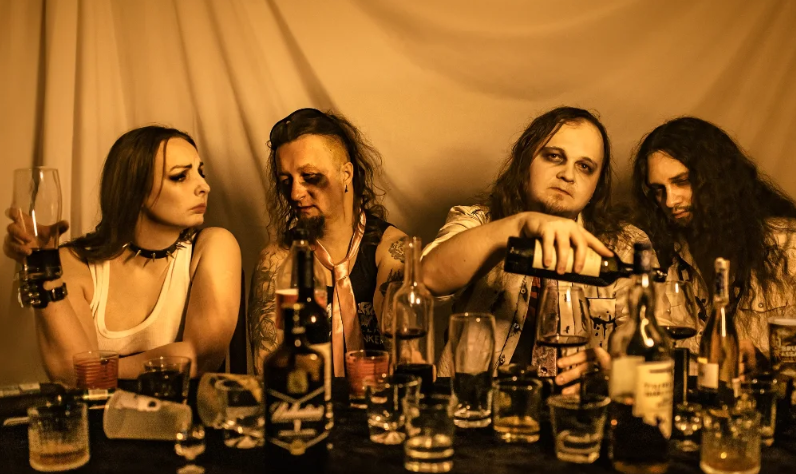
Hangover in Minsk
© Nadia [greena_photos]
Tracks
“Farewell” [04:20];
“Drunk and Beautiful” [05:36];
“Fuck You, My Love” [05:17];
“Devil in Me Wants to Dance” [05:28];
“The Cow Was Stolen from the Bar (Again)” [04:47];
“Morning Mourning” [05:20];
“Till Soberness Do Us Part” [05:31];
“Party Is Over” [04:42].
Follow Hangover in Minsk!
Youtube: https://www.youtube.com/@HangoverinMinsk;
Bandcamp: https://hangoverinminsk.bandcamp.com/;
Spotify: https://open.spotify.com/artist/1xstYK0cWVjCIQbQXvnvCF;
Facebook: https://www.facebook.com/hangoverinminsk;
Instagram: https://www.instagram.com/hangoverinminsk/.