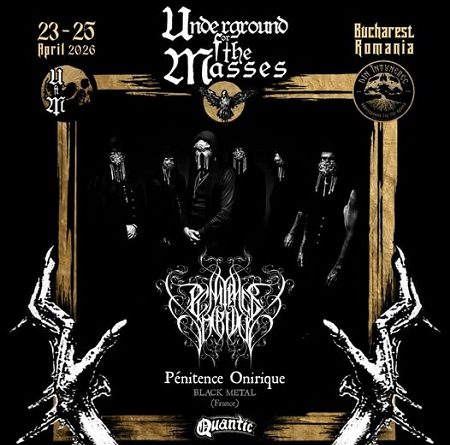
From the depths of the French underground, Pénitence Onirique has carved out a unique identity built on atmosphere, introspection, and raw emotional intensity. Blending elements of depressive black metal with post-black textures, the band creates a sound that feels both suffocating and strangely cathartic. Across releases like V.I.T.R.I.O.L., Vestige, and Nature morte, they have explored themes of inner decay, existential struggle, and the fragility of the human psyche. With their upcoming performance at Underground for the Masses this April, they are set to translate that introspective darkness into a powerful live experience. We spoke with the band about their origins, evolution, and the emotional core of their music.
DinIntunerec: Hello, thank you for getting on board with this interview. Can you take us back to the early beginnings of Pénitence Onirique—how did the band form, and what was the initial vision?
P O: Hello and thank you very much for invite us for the Underground for the Masses festival.
Pénitence Onirique started in 2015 in Chartres, a mid-sized city located in France’s center, mainly known thanks to its cathedral. By that time, Bellovesos was the only member and wrote all the music of V.I.T.R.I.O.L. Once the music was recorded, Bellovesos suggested to Logos (known as Diviciacos at the time), with whom he had shared several bands, that he records his vocals. This is how the first album came to life.
Following, Bellovesos and Logos’s moved to the southern part of the Île-de-France region and their encounter with Vorace. Thus, the opportunity to sign with Les Acteurs de l’Ombre arose. At that time, the lyrics revolved around alchemy, and the music was highly atmospheric—not necessarily composed to be performed live. A live line-up was then gradually formed.
DinIntunerec: The name “Pénitence Onirique” is both poetic and evocative—what is the meaning behind it, and how does it reflect your music?
P O: “Pénitence Onirique” is an oxymoron which defines our music : the aggression of black metal and death metal on one hand, poetry and the search of refinement on the other hand. It’s also why, even though our lyrics deal with difficult events or emotions, we always strive to a positive way out, a glimmer of hope, a promise of elevation, rather than indulging in sadness or hatred.
DinIntunerec: Your sound carries a strong emotional and introspective weight—what were your main influences when starting the band?
P O: When Pénitence Onirique was created, the goal wasn’t clearly defined ; it was primarily a cathartic project for Bellovesos, with influences that were very diverse and not limited to black metal. Over time, and with the arrival of a full line-up that quickly became involved in writing and interpreting the songs, the influences became even more varied, reflecting our individual musical backgrounds : black metal, of course, but also death metal, melodic death, hardcore, funk, classical music, and more.
DinIntunerec: How has your artistic vision evolved from your early material to your most recent work?
P O: Each album is an opportunity for us to explore a different theme that is close to our hearts. V.I.T.R.I.O.L. deals with alchemy, Vestige with progress and how it can be both endured and imposed, and Nature Morte explores the themes of mimetic desire and the scapegoat, drawing on the work of French anthropologist René Girard. We never shy away from experimentation, whether in lyrics, music, or artistic direction. We create what we want to see and hear. However, our individual discoveries, encounters, and accumulated experiences help us to evolve. Looking back, we can see an evolution in song structures, more complexity, with faster and more varied rhythms, and a shift away from atmospheric black metal toward other styles.
DinIntunerec: Your album V.I.T.R.I.O.L. has a very raw and immersive atmosphere—what was the main concept behind it?
P O: As I said before, the concept of V.I.T.R.I.O.L. revolves around the theme of alchemy. Musically, the album was composed as a single, cohesive piece, without overthinking, almost like a one-shot studio project. The riffs are characteristic of 2010s atmospheric black metal : generally mid-tempo, hypnotic, and highly ambient.
DinIntunerec: On V.I.T.R.I.O.L., there’s a strong sense of inner turmoil and transformation—how did you translate those themes into music?
P O: Indeed, this album is deeply personal and tormented. It was an opportunity for Bellovesos to express and expel the “sulfur” within him at that time (sulfur being one of the three fundamental principles of alchemy, along with mercury and salt).
DinIntunerec: With Vestige, there seems to be a shift toward more layered and atmospheric songwriting—was this a conscious evolution?
P O: From the start of the writing process, it was clear that we didn’t want to make V.I.T.R.I.O.L. part two. Our mindset had changed, and we had a solid, united line-up. We wanted to bring more variety in the music : faster, more direct tempos (as in Souveraineté Suprême), more worked clean guitar atmospheres (as in Les Sirènes Misérables), and groove (as in Vestige). We also had the opportunity to collaborate with Cédric from D.N.I. Studio, with whom we worked on guitar sounds, particularly the ambient guitar.
DinIntunerec: Vestige feels deeply melancholic and introspective—what emotional or conceptual space were you exploring on that record?
P O: This album explores the disconnection between progress and how it is perceived. Philippe Muray, whom we quote in the booklet, illustrates this point very well : “The modern is what must be endured anyway, without the possibility of criticizing it, and even fewer to fight it.” However, this album is perhaps less emotional than its predecessor, at least in the lyrics. It is more driven by anger and the feeling of being left behind.
DinIntunerec: Your latest album, Nature morte, has been described as both intense and contemplative—what was your main vision going into its creation?
P O: Musically, we wanted to move toward faster riffing and more aggression. The arrival of Iendar on drums, who comes from the brutal death metal scene, allowed us to do that. This album was born out of struggle at every stage of its creation. These difficulties are also reflected in the emotional involvement of each member : speed, aggression, violence in the music and vocals.
DinIntunerec: On Nature morte, there’s a refined balance between aggression and atmosphere—how did your songwriting process evolve for this release?
P O: The music writing process was quite long, and the songs evolved significantly from the initial writing to their final, collective validation. We had composed a large volume of songs, riffs, and ideas over the three years between Vestige and Nature Morte, but only a small portion was kept for Nature Morte.
DinIntunerec: Across your discography, how do you balance raw black metal intensity with more atmospheric and post-black elements?
P O: We strive to maintain contrast in our music, as it helps us highlight intensity and emotion, whether through ambient, epic, or aggressive passages. However, we don’t follow any pre-defined formula; we compose by instinct.
DinIntunerec: Your lyrics often feel deeply personal and philosophical—how important is introspection in your creative process?
P O: Introspection isn’t a systematic or deliberate process in our creative workflow, but it is an endless source of inspiration. It’s also an opportunity for individual growth, and we want to share this mindset.
DinIntunerec: You’re set to perform at Underground for the Masses in April—what can fans expect from your live performance?
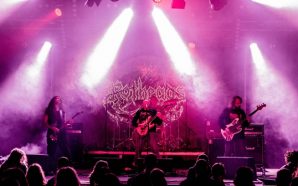
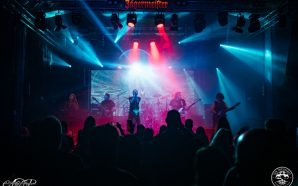
P O: Once again, we are thrilled to play at Underground for the Masses. We will make sure to include songs from all eras (as much as possible), with a particular focus on our latest album. On stage, those who honor us with their presence can expect raw emotion, devastating blastbeats, and a journey that is both violent and poetic.
DinIntunerec: How do you translate such emotionally intense and atmospheric music into a live setting?
P O: On stage, we want to give as much space as possible to the music itself. The scenography, lighting, and stage performance come second, and finding the right balance is challenging. In practice, we rehearse a lot and we play with our hearts onstage. For us, this is the best way to translate our music live.
DinIntunerec: What were the main obstacles that you had to overcome during your activity?
P O: The COVID-19 pandemic and its chaotic management in the French cultural sector were major obstacles for us in recent years. The pandemic did a lot of damage to the cultural world in general, especially in the associative sector, which black metal in France relies on heavily. Balancing Pénitence Onirique with professional and personal life is also a constant challenge. None of us are professional musicians, and we have to work around tight schedules. We also have family lives, some of us have children, and it’s impossible to do everything without making choices and sacrifices. But it’s all worth it when we make music together and perform on stage. We want to thank our families for their support and for helping us to continue our journey.
DinIntunerec: What is the main driving force which urges you to write music?
P O: We all take great pleasure in creating and playing music together. Music is an integral part of our lives, and we can’t imagine living without it. Each of us has 20-25 years of musical experience behind us, and we no longer want to stress over contractual obligations or force ourselves to play under bad conditions. Now, we play for our own enjoyment, and that is the main driving force behind Pénitence Onirique.
DinIntunerec: What makes you more wired up: writing new music or performing life? What’s the best thing for you about performing live?
P O: Each member of Pénitence Onirique has a different perspective. Some prefer the stage, others the studio. However, the best part of live performances is the sense of connection between us and the audience… The feeling that we are one in the music and that the audience is receptive. We also really enjoy meeting each of you at the merch stand or backstage.
DinIntunerec: What is the most important life lesson that you have learned so far?
P O: No matter how many difficulties we face in life (and there are many, and they are hard), there is always hope and a helping hand to guide us through the trials.
DinIntunerec: Looking ahead, what is the next step for Pénitence Onirique—are there new themes or directions you’re interested in exploring?
P O: A new album is currently in the works. However, we don’t want to give any release dates yet. We want to avoid the setbacks we encountered with the release of Nature Morte and leave nothing to chance. I can tell you that new themes will be explored, both musically and conceptually. The next album will sound different from its predecessors.
DinIntunerec: Thank you for your time, any final words for our readers?
P O: We thank each and every one of you for following us over the years. We can’t wait to see you at Underground for the Masses and promise an intense show. Don’t hesitate to come and talk to us before or after the show at the merch stand. Thank you for supporting our scene, and thank you to the Underground for the Masses team for their involvement and hard work.
With a sound that merges emotional depth and sonic extremity, Pénitence Onirique stands as one of the most compelling voices in the modern French black metal scene. Their music is not just an expression of darkness, but a journey through it—introspective, suffocating, and ultimately transformative. As they continue to evolve and bring their vision to the stage, they invite listeners to confront the shadows within and emerge changed.