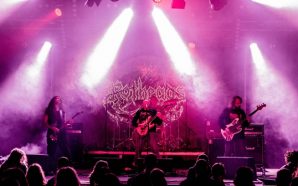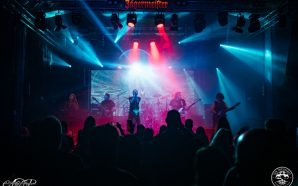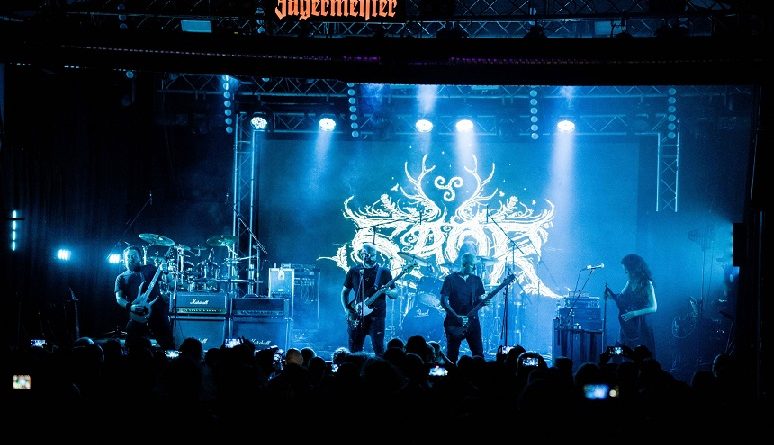
Saor, the acclaimed Scottish folk/black metal project led by Andy Marshall, has redefined atmospheric extreme metal with its sweeping soundscapes and historical depth. Combining black metal’s intensity with traditional Celtic melodies, Saor crafts music that feels both epic and intimate — a sonic tribute to Scotland’s landscapes, myths, and spirit.
DinIntunerec: Hello, thank you for getting on board with this interview and welcome back to our beautiful country!
Andy Marshall: Hello, nice to meet you, it’s great to be here.
DinIntunerec: Tell us a few words about Saor, how did you decide to form the band and what did you have in mind at the very beginning?
Andy Marshall: When I was a teenager, I used to like a lot of folk and black metal, that was about history and heritage and theology and all that kind of stuff. There was never just one, they were all from Norway and all these kind of countries and there was none from Scotland, which I found kind of weird because we have really good history and myths and landscape and all the perfect ingredients for a metal band, so that was my inspiration to start doing this kind of music.
DinIntunerec: What is the story behind the name of the band?
Andy Marshall: It’s correctly pronounced /Seur/ and it means free and Gaelic. There’s no in-depth answer to this one, I just liked the name, how it looked aesthetically. Also, the fact that it means free and Gaelic. I think it represents my music as well… I’m not tied down to one genre, hopefully, even though people think that. People say the band is black metal and I don’t agree with that. I like to think of it as just atmospheric metal or folk, as I embrace freedom of styles and of music as well.
DinIntunerec: Saor ’s music seamlessly merges Scottish folk traditions with the aesthetics of atmospheric black metal. How do you approach balancing authenticity in both worlds without compromising either?
Andy Marshall: As I have just mentioned, I don’t really consider it black metal. There are definitely influences of black metal, but when I write stuff I don’t think I’m going to write a black metal record. Mixing the two styles comes kind of naturally, I guess. I used to listen to quite a lot of cheesy, corny folk metal and I grew out of it, but I still like the idea of folk instruments and metal. There are a couple of bands that add folk instruments quite tastefully into metal and I like that more than the cheesy Viking kind of stuff. Black metal influences have roots in my adolescence… because I used to listen to loads of black metal. Thus, I think it’s just a natural merge.
DinIntunerec: Historical and mythological themes are central to your work. Could you describe your research process and how you translate those stories into music and lyrics?
Andy Marshall: It’s more of a hobby, I’m just having an interest in history and I used to like it even when I was a little boy. Actually, I’ve always been fascinated by history and history of Scotland in particular, obviously, because I’m from there. How does history translate into music? Well, I just take influence from certain periods of time, certain battles and certain people, and I try and put it into the music. It’s as simple as that.
DinIntunerec: Your compositions often feature expansive, cinematic structures. What role do dynamics and pacing play in guiding the listener’s emotional journey through an album?
Andy Marshall: Well, I’m a huge fan of movie soundtracks and the Lord of the Rings soundtracks are among my favorites, so there’s always a cinematic element into the music. I really like that epicness and the feel. The dynamics, I guess. I think it’s too much new metal music which sounds like… let’s use the technical term brick wall, cause it’s too loud. There’s no dynamics in the clean parts and the quiet parts. I think it makes more of an impact when you have a quiet part and it goes into a metal part. So, I like the dynamics of Saor and other similar bands.
DinIntunerec: Folk instrumentation is a key element in Saor ’s sound. How do you select which traditional instruments to feature, and what challenges arise in integrating them with metal arrangements?
Andy Marshall: We’ve always used acoustic guitar, tin whistles, low whistles, bag pipes. That’s the kind of main instruments we usually use. The issues we run into sometimes are the pitch or the tuning of certain instruments, but with modern technology you can alter things on computer, which is quite good when you’re recording.
DinIntunerec: Your production has evolved noticeably over the years. What changed in your approach and about capturing atmosphere in the studio?
Andy Marshall: Well, we signed to Season of Mist which meant we got our first advances, money advances. All the old albums are self financed. We didn’t have any money. Personally, I think they sound terrible and I don’t like the sound. I know some people like those albums, but I never intended to sound that bad. So, the new album and the album before, that’s the production I like. Clean, yet it still holds a bit of realness to it, a bit of grit.
DinIntunerec: Nature appears almost as a character in your music. Do you compose with specific landscapes or locations in mind?
Andy Marshall: Sometimes, I guess… I mean, when I’m writing demos, sometimes I’ll get landscape pictures and take inspiration from them, just looking at them and playing. Or, obviously, being there in person. I like going out, walking and being in nature. So, I don’t really compose always with specific landscapes on my mind, but sometimes I’m influenced by some.
DinIntunerec: Saor is primarily your solo vision, yet live shows require collaboration. How do you translate such layered compositions into a live setting with session musicians?
Andy Marshall: I just send them the parts and they play them. The live lineup is international… we’ve got a drummer from Spain, a guitarist from Switzerland, Ella, the folk instrumentalist, she’s from Germany. We just send things online without actually rehearsing together. So, we make a click track and we just rehearse at home. Then, we come together at a gig and play. So, all those guys have just learned the parts by themselves. That’s how Saor works.
DinIntunerec: The Scottish metal scene has a unique identity. How has your work contributed to — or diverged from — that cultural landscape?
Andy Marshall: I never thought about that, neither have I considered that I was part of the Scottish Metal scene. I don’t know anything about it. I’ve never been involved with anyone in it, really. I could name maybe three Scottish bands. I don’t really have anything to do with scenes. Actually, I don’t like the idea of scenes, to be honest. As I just said, I love the bands from Europe, so I maybe consider it more of a European band than Scottish band.
Also, I just don’t like local scenes because I feel it’s very small and everyone knows everyone and I always want to play in places like this, out of Scotland. So, I don’t really have anything to do with the Scottish Metal scene, to be honest. Although people will put the band in that scene just automatically because I’m from there. But I don’t have anything to do with it, personally.
DinIntunerec: Looking back on your discography, which album represents the clearest expression of your artistic intent, and what does it reveal about your evolution as a musician?
Andy Marshall: Well, I’m going to say the new album, obviously. And I would probably say the next album, when that’s released. But the new album probably because it mixes a lot of the old with new and the production is better, in my opinion. The songs are very strong ones, so I would say Amidst the Ruins at the moment. I know of fans really love Aura, the 2014 album. That seems to be one of the most popular ones. I think the songs are good on it, but as I said, I don’t really like the production.
DinIntunerec: Amidst the Ruins is one of Saor ’s most ambitious works. What was the initial concept behind this album?
Andy Marshall: Honestly, I don’t really go into writing concept albums, if that makes sense. I just basically had some themes, historical, landscape themes, and I just put them all into one album. I guess the name Amidst the Ruins has kind of a double meaning for me. The album cover obviously has a druid with the staff looking at it, and it’s like being Amidst the Ruins of an aged past, I guess. Also, if you put it into modern terms, it’s like Amidst the Ruins of everything that’s going on in the world. Everything stays the same in nature while everything around is collapsing. So that was kind of the loose concept, but all the individual songs have different meanings. It doesn’t link up as a concept album, per se.
DinIntunerec: The album feels both mournful and triumphant. How did you strike that emotional balance during the writing process?
Andy Marshall: It’s a hard question to answer because I just write the music and hope it sounds good. I don’t really think about those things when I’m writing, to be honest. When I’ve got the guitar and I’ve got the bass and I’ve got the drums, I just record and I just feel it. I know what to do in the songs, so I don’t really think about things like mournful or triumphant. I just try to be me. And I hope people like it.
DinIntunerec: Can you discuss any particular track on Amidst the Ruins that you feel best represents the spirit of the album?
Andy Marshall: My personal favorite is Amidst the Ruins, the title track, because it’s got… intensity and a little bit of heaviness. It’s got that really nice middle part with the whistle and almost atmospheric, post-rock type elements. And, at the end, it’s got a big solo and clean vocals. Also at the end it’s got the acoustic guitar. So, I think it has got all the ingredients for a great song. I would choose that one.
DinIntunerec: Production-wise, how did this album differ from your earlier releases, and what techniques helped achieve its sweeping atmosphere?
Andy Marshall: I recorded all the guitars and stuff myself, this was the first time I’d ever done that. I built my own studio for the first time in my garden. And I recorded there. Then, it was the guys that mixed it and mastered it that made it sound good. I just recorded it. But I gave them good references of other music and sounds I liked. I actually can tell from this album to like maybe the old albums and productions a lot. It’s cleaner but it’s still got a little bit of edge.
DinIntunerec: What has the reception of Amidst the Ruins meant to you personally, and how do you see it shaping the direction of Saor ’s future music?
Andy Marshall: As far as I can tell it’s been pretty positive. People have liked it. I think there’s still people that like the older albums better. They like the more black, if you want to call it black metal influenced kind of stuff.
If someone sends me a review I’ll read it, but I don’t really pay much attention… I don’t want to say I don’t care, but I don’t really mind because I just write the music for me. It’s my expression so I’ll do what I want. I’m not going to let some reviewer dictate what I’m going to do. I think it’s been mainly all positive and I hope more people like it. It’s just nice to know other people like it. But shaping the direction in the future… I mean… I’m probably going in that sort of style I think. Long songs, atmosphere and stuff like that.
DinIntunerec: Were there lessons or discoveries from creating this album that will influence your future work?
Andy Marshall: I learned a lot about recording. As I said, I recorded it myself so I learned a lot about the recording aspect of things. The techniques of how to record and edit properly. That’s one of the things I learned. Also, I learned that other people can make it sound better than I can.
DinIntunerec: What makes you more wired up: writing new music or performing life? What’s the best thing for you about performing live?
Andy Marshall: Writing music. Undoubtedly, writing music. Playing live is fun, but writing music is the passion.
DinIntunerec: As listeners anticipate your next chapter, what can you share about future projects, new sonic directions, or thematic concepts you are eager to explore?
Andy Marshall: I’ve got a side project called Fuath which is more black metal. I’ve just finished the new album. It’s going to be released in January. For sure we’re doing a recording for next year… that’s going to be released next year. I’ve been writing new material for the next Saor ‘s album as well. I’ve been busy writing stuff.
DinIntunerec: What was the best or worst, an unforgettable incident, a memory that happened while on tour or during a live show?
Andy Marshall: When I was in America I nearly got electrocuted. At one gig I nearly got electrocuted and we played one song and then walked off. That was probably the worst gig. Apart from that only little things happened… like today… I lost my bass. Hopefully, someone can lend me a bass here.
That’s not the worst. The worst thing is we turned up to a show and it was really badly organized. The guys were all drunk and stoned and the equipment was electrocuting. We played a song and we decided it’s not worth getting blown up. So, after one song we said sorry guys ask for a refund. Then we walked off. That was probably the worst moment.
DinIntunerec: What is the most important life lesson that you have learned so far?
Andy Marshall: Don’t take it too seriously. Don’t take life too seriously. Have fun and have a laugh. Don’t worry about stupid stuff. Just enjoy spending time with your friends and family. That’s what I’ve learned. Family and friends first over everything else.
DinIntunerec: As our conversation with Andy Marshall draws to a close, it’s clear that Saor is far more than just a musical project — it is a vessel for heritage, emotion, and storytelling. By weaving together black metal ferocity, folk tradition, and a deep reverence for Scotland’s past, Saor continues to inspire listeners worldwide. Whether through future releases or live performances, Andy’s work promises to transport audiences to windswept highlands and mist-covered glens, reminding us that music can be both a personal expression and a cultural monument. Thank you for your time, Andy, any final words for our readers?
Andy Marshall: Thank you for the interview. I always love playing in Romania. It’s actually been my third time in the country, but it’s my second time playing music. First time was at Dark Bombastic Evening with an old band in 2012. When I had hair. I’m really looking forward to playing tonight. Apologies to anyone if my bass tone is bad tonight. I lost mine and I have to use whatever I can get. Anyway, I’m happy to be here. See you in a couple of hours!