Composing both music and lyrics since 1995, Heljarmadr has become a recognised name in the black metal scene. Grá began in 2010 as a mind exercise intended to widen horizons while composing an album for his other band, Cursed 13, but the project soon developed into something of its own. Since then, the Swedes have added a series of albums, EPs and singles to their discography, while their work continues to move forward, with a new album currently in the making.
Official logo
© Luciana Nedelea
When we saw that the members of Grá would be coming to Posada Rock Festival, held in Câmpulung Muscel, Romania, from 28 to 30 August 2026, we contacted them for an interview. Heljarmadr responded promptly.
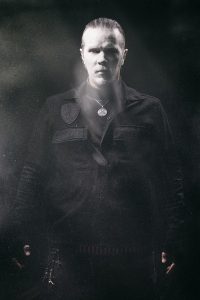
Heljarmadr
© Official website [https://www.grahorde.com/]
Heljarmadr: Thank you for your interest and for you kind words. I think that being a creative person leads you to seek for new paths to walk, out of curiosity and also the will to draw things out from the void and materialise it. Grá was initially a mind exercise to widen our horizons while composing an album for our other band Cursed 13 [which was disbanded permanently in 2018]. Things evolved and before we knew it, others took interest and it expanded from there.
The themes revolve around Ancient Scandinavian spirituality, misanthropy, and death worship. Ancient Scandinavian spirituality, in particular, has always fascinated me. I have to ask, where did you conduct your research for those lyrics?
Heljarmadr: I think my own interest came quite naturally, being Scandinavian and all. I think it’s something we all do at one point or other in our lives, tracing our ancestral roots.
Back in the day, research was done by spending hours in libraries as internet wasn’t really existing as we know it today. I guess I should add that even though Grá was born in 2010, I have been playing in bands, composing both music and lyrics since 1995. A lot of the words and riffs that have ended up on Grá albums come from old tapes and notebooks. Especially in the early years of Grá.
Moving to the first EP, entitled “Helfärd” [2010], what can you tell me about its creation?
Heljarmadr: It was a primitive and improvised recording. As mentioned before, we were exploring new ventures to get a pause from the more polished Cursed 13 and I had just obtained some new recording equipment that we decided to try out.
The whole EP was written and recorded during a single weekend at a rehearsal room inside a cave in a Stockholm suburb.
In 2011, you released “Grá”. Which composition on the album do you feel came closest to fully realising the vision you had in mind?
Heljarmadr: Personally, in hindsight, I think that the album became a bit too long. I guess we just had too many ideas at the same time and unintentionally crammed it a bit.
One of my favorites is “Offerrök”. Some of those riffs came from the 90’s tapes I mentioned earlier. It has this “passive aggressive” vibe where the guitars are constantly chasing but are held back by the slow drum beats.
“Ending” arrived in 2015. Listening to it, I could not help but feel that it was a deeply personal record. Was that also how you perceived it?
Heljarmadr: I think you need to also listen to the link in between the debut album “Grá” and “Ending”, the “Necrology of the Witch” EP, to fully understand that we where going in that direction all along. All our releases from “Helfärd” to “Ending” are connected into a concept and belong together. Where “Helfärd” was the inexperienced and chaotic beginning, “Ending” was the ultimate and deliberate end to the concept. We have been refering to it as the “Charon Suite”.
All music that I write is personal, one way or another. Maybe you just felt more personally related to the “Ending” album for your own reasons?
“Väsen” from 2018 received the recognition it deserved. Did the work progress steadily throughout the recording sessions, or were there moments when everything ground to a halt?
Heljarmadr: “Väsen” came after a long discussion about if we should end the band or not, after “Ending” kind of concluded what we had aimed for when we started Grá. We did decide to continue as you know, but made a few changes to avoid just repeating ourselves.
The logo was changed and we went in a new direction, as the concept albums were done we felt like we really needed a fresh start, or disband completely.
The cover of the aforementioned album is also one I would like to speak about. Whose idea was it, and what does it mean to you?
Heljarmadr: We had gotten in contact with Axel Torvenius and really wanted him to bring something new into our visual world. We provided him with a few demos and discussed some ideas and this is what he eventually came up with. “Väsen” means “entity” [in a spiritual context, like a ghost or a soul]. That, combined with the song “Krig”, which is Swedish for “War”, took us on this path. If you go to the Torvenius webstore and check, he is selling a t-shirt with an alternate version of “Väsen”, without the soldier. Here’s a link: https://torvenius.store/products/gra-vasen-design-official-merchandise-t-shirt.
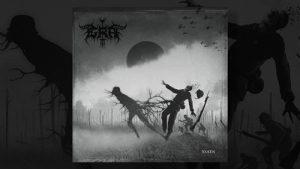
Official cover artwork for “Väsen”
© Axel Torvenius
Going to “Lycaon” [2023], I found myself wondering what first drew you to that figure. Why did you decide that this was the right one for the name of the album?
Heljarmadr: Grá means “grey” in a bastardised version of Swedish [ “grå”] and Icelandic [ “grar”] that to us symbolise what’s “in between”. Between black and white, between worlds and so on. It connects with the conceptual “Charon Suite” which was all about dying/death/afterlife.
A “Väsen” is also somewhere in between the living and the dead as I explaied before. The same way you can say that Lycaon [the original werewolf] stand in between the rules [and morality] of society and the outlaw rules of nature, survival of the fittest and so on.
With that said, “Väsen” and “Lycaon” are NOT conceptual albums. We left that path with the “Charon Suite” and allowed our songs to be more “stand-alone”, representing only themselves instead of belonging together. Where the next album will take us remains to be seen though…
The album includes two cover versions, “Torn Asunder” from Cursed 13 and “Chariots of Fire” from Bathory. What made those two songs the right choices for this album?
Heljarmadr: To be fair we did record three covers but only two of them made it into the album. We also recorded “Shout at the Devil”, a Mötley Crüe song that was released on its own a year or so after the album. It can be discussed if “Torn Asunder” is really a cover though, as I wrote it together with Vediger [our bass player] and it has only ever been released on a Cursed 13 demo tape many years ago. The two versions are also quite different from each other.
Anyway, what a lot of fans didn’t seem to grasp is that “Lycaon” is an album that comes from a period in our lives where we all were listening a lot to 70’s and 80’s metal. We decided to being that ingredient into the album, that’s why there are so many twin guitar parts, some really catchy riffs and why the bass has such a big role in the structures of the songs. We grew up with that kind of music and we loved the idea of incorporating it into our own songs, to create something fresh. During those discussions we also touched the subject of doing some cover songs. We ended up recording “Chariots of Fire” and “Shout at the Devil” during the album sessions. When it was time to release the album, we felt that “Chariots of Fire” would be a better fit for the flow of the album and that “Shout at the Devil” would drag it too far away from what we are ultimately doing, which is in essence black metal.
If you take a look at the album cover for “Lycaon”, it’s quite easy to find parallells to Iron Maiden, Judas Priest, Motörhead and so on. There’s also an easter egg… if you take a look at the upper part of the “Väsen” album, you basically see “Lycaon” coming.
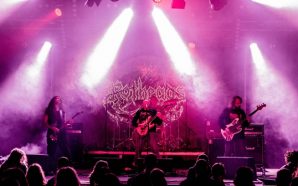
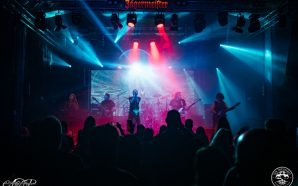
You are no strangers to the stage, and in 2016 Grá performed in Romania for the very first time at Quantic in Bucharest. How did you perceive the atmosphere that night?
Heljarmadr: I remember it as a very good night! We were excited to be there, the crowd was more than enthusiastic and we have made many attempts to return ever since, but it hasn’t really worked out until now.
Not long from now, you will be returning to Romania once again, this time for Posada Rock Festival in Câmpulung Muscel. How are you preparing for this performance?
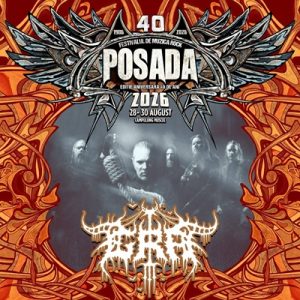
Official announcement poster
© Posada Rock Festival
Heljarmadr: Yes! And we are REALLY looking forward to it. The booking/offer came very late but luckily we all were able to get the time off for it. We are actually working hard on a new album and have turned down a lot of show offers lately, to be able to focus on the album. But when this offer came, we felt that it was meant to be so of course we said yes. We are already preparing a great selist and all flights are booked.
Is there a particular track you are prioritising while rehearsing for Posada Rock Festival?
Heljarmadr: All I can say is that we have a great setlist prepared for the festival. Come and listen for yourself!
After Posada Rock Festival comes to an end, what are your plans?
Heljarmadr: We go straight back into working on our new album. It feels like this fest will be a great way to end the “Lycaon” cycle, to come back next time again with new material, let’s not ever make it ten years in between again though!
Music can become a refuge for some people, while for others it can be a way to confront their own darkness. Do you think about the impact your music might have on those who listen to it?
Heljarmadr: I think it is 100% individual and art is, and should always be, in the eye [or ear] of the beholder. I write music for ME first. Of course it’s great that others enjoy it but my mindset must always be to put myself first.
I am also a music lover, I consume a lot of music and I choose what to listen to depending on what speaks to me. It can be heard quite clearly when artists are writing music for other people to hear, for potential sales or just fighting strict deadlines.
Let us open some other corners of the mind, shall we? How much of Heljarmadr can be found inside Grá, and how much of Grá exists as something separate from you?
Heljarmadr: Grá is a band effort, it is a sum of who we are in the band. I’m a part of that sum. I am not Grá and Grá is not me. We are Grá together, just like I am also a part of Dark Funeral or Domgård for example. I compose a lot of music and sometimes things just doesn’t fit into certain contexts, that’s a reason why I’m involved in a lot of things. I do this full time and it is my passion as well as my profession. While others might have other interests in life, this is what I do and what I breathe.
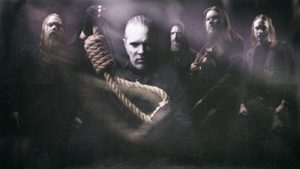
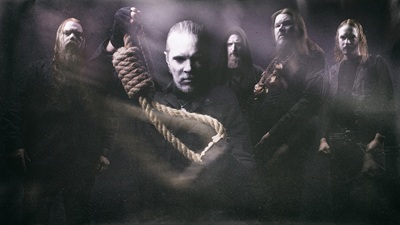
Grá
© Official website [https://www.grahorde.com/]
Heljarmadr: I’m always wondering what the next song/concert/album will be like. If that curiousity ever dies, I will hang my hat and retire.